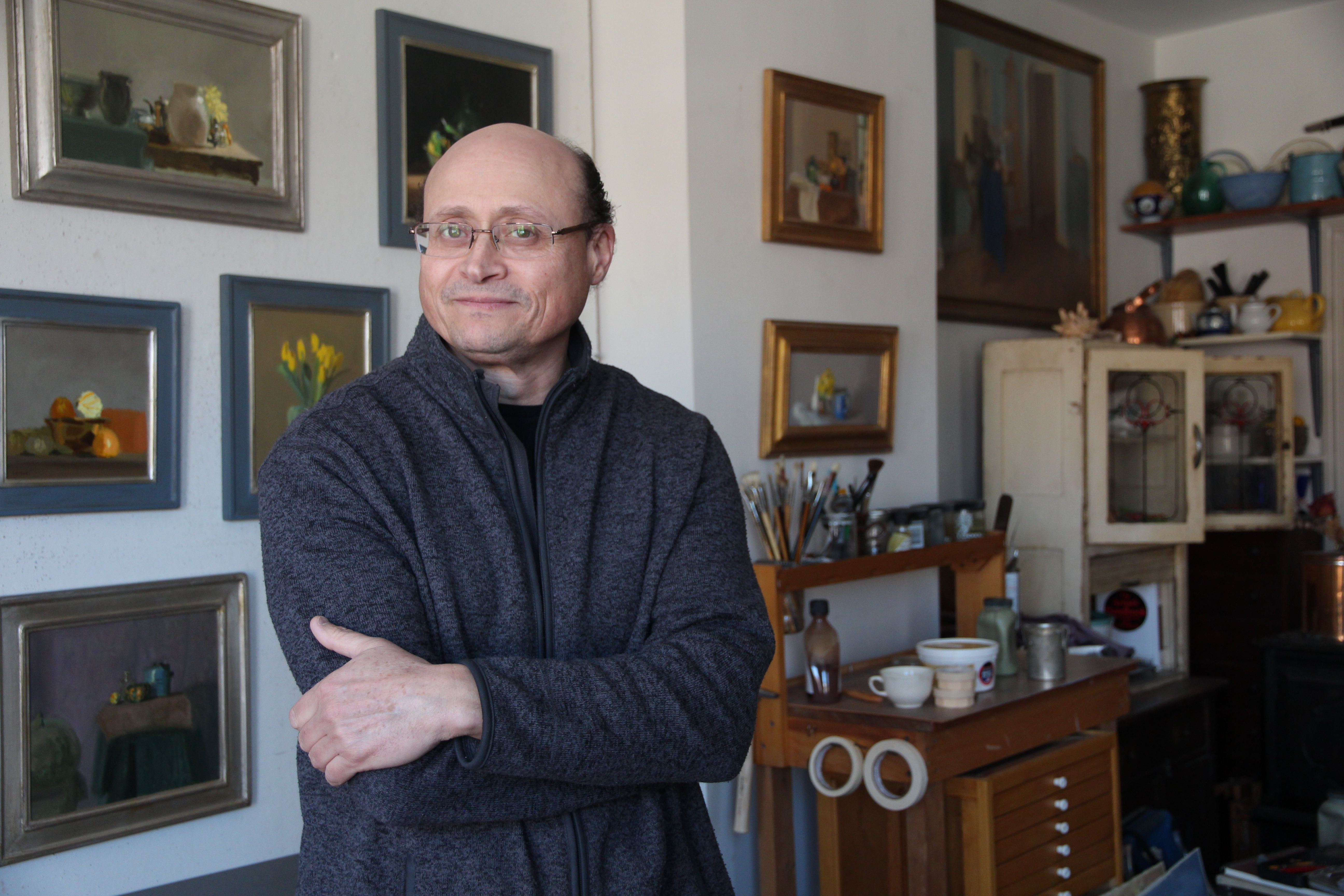
Portrait of Reverend Adan Mairena

“My great-grandmother was a small Indian woman and she had this one child who looked like the owner of the estate, so they had to pick up and move to the city.”

Reverend Adan Mairena is the pastor at West Kensington Ministry, in Norris Square, Philadelphia.

Mairena testifying at the House of Representatives in Washington, D.C., January, 2015.

Mairena testifying at the House of Representatives in Washington, D.C., January, 2015.

I consider myself more like a second-generation immigrant as I was born in Honduras, but after my parents had come to the US. I only lived there my first year. I was born in Honduras because my mother went back to take care of immigration business. My mother stayed there with me for about a year. My two older sisters were born here.

My parents came to the US in the 1960s. My father came first. He came here as a political refugee, but was not labeled as such. He was born in a town of silver mines, San Juancito, outside the capital. The whole town worked in the mines. My grandmother sold food to the miners, and was then able to move to the city and they became middle class people. The poorer people lived in the mountains; that is where my mother came from. My father and his friends became educated and he became a teacher.

At that time Honduras was quiet compared to neighboring Central American countries, the military was in charge, and of all countries Honduras had the most US military presence. There was political unrest, however, and my father and his friends were criticizing the government and his friends were turning up dead. My grandmother had started some bars and restaurants and someone came in one day and said your son is next. So she bought him a plane ticket and he went to New Orleans where he had some cousins already there. He worked as a waiter, in construction, hard labor jobs. Mom was still in Honduras and he brought her to New Orleans. If you came to certain areas, you didn’t have to learn English, and she said, “If we don’t leave we will be like this forever and never learn English.“ So they left New Orleans to be on their own and to become more acculturated.

My grandmother had white skin and blue eyes. She was born while they lived on an estate owned by Germans. My great-grandmother was a small Indian woman and she had this one child who looked like the owner of the estate, so they had to pick up and move to the city. The landowner couldn’t have his illegitimate daughter—my grandmother—running around the estate. Once in the city, and after my grandmother was in her teens, she married an older man, a carpenter, and he took care of the family. I must look more like my great grandmother more than my grandmother. I am very in tune with how I look and where I came from.

My mother’s side—that describes the history of millions of Mestizos. Mestizos are a byproduct of rape and exploitation, and that is an important part of my identity, my point of historical reference. That is what gives me a sense of intentionally confronting injustice.

At West Kensington Ministry, on behalf of Sanctuary for Angela.

At West Kensington Ministry, on behalf of Sanctuary for Angela.

The town where my father was born had the first Pepsi plant in Central America. The natural resources were exploited till they were gone; now, it is almost a ghost town. My father was a public school teacher in Honduras, and he was a Roman Catholic. But when he came here, the Pentecostals embraced him as an immigrant. They all hang out together and ate together, and did everything together. He became a Pentecostal, but he wanted to go to seminary and they did not support that. So he went to a Presbyterian seminary, did an internship in Chicago, and then we moved to South Texas in order for him to work at a church there. South Texas was an agriculturally based economy and my father worked with farm workers and sometimes brought people home to stay for weeks at a time. My aunt came from Honduras with her daughter and my dad drove to the border and picked her up—he smuggled them in, and other people too. So I always had a sense of knowing that I am an immigrant.

My mom says she doesn’t need to return to Honduras. We’ve visited on average about every twelve years. There is no internet so phone is the best way to keep in touch. My grandmother would come here to visit when I was a lot younger. My parents had become Protestants, from a family that was all Roman Catholic, so that was a big cultural difference. My mother also went to seminary. She worked at a bank for many years and then went to seminary and also became a Presbyterian minister. Now she is a hospital Chaplain in Texas.

I became a citizen at age fourteen, before that I had a green card. My parents left that decision up to me. My sisters were born here so they were citizens from birth, and my parents became citizens too. It was definitely easier then (before 9/11) than it is now.

I am bi-cultural. I don’t feel pulled by different cultures, this is its own culture. In Honduras they say “you don’t speak Spanish like us,” and here they say “you are from there when are you going back,” even though I have spent my whole life here.

Jesus was an immigrant, from the divine world to this earth. The history of the world is the history of a people on the move . . .

Spanish translation by Amalfi Ramirez Finnerty


Reverendo Adan Mairena

Pastor en el Ministerio de West Kensington, Norris Square

Me considero más como un inmigrante de segunda generación porque nací en Honduras, pero después de que mis padres vinieron a los Estados Unidos. Solo viví allí mi primer año. Nací en Honduras porque mi madre regresó para ocuparse de los asuntos de inmigración. Mi madre estuvo allí conmigo por un año. Mis dos hermanas mayores nacieron aquí.

Mis padres vinieron a los Estados Unidos en la década de 1960. Mi padre vino primero. Vino aquí como refugiado político, pero no fue etiquetado como tal. Nació en un pueblo con minas de plata, San Juancito, en las afueras de la capital. Todos en la ciudad trabajaban en las minas. Mi abuela vendió comida a los mineros, y luego pudo mudarse a la ciudad y se convirtieron en personas de clase media. La gente más pobre vivía en las montañas; de ahí es de donde vino mi madre. Mi padre y sus amigos se educaron y el se convirtió en maestro.

En ese momento, Honduras estaba tranquila en comparación con los países vecinos de Centroamérica, los militares estaban a cargo y, de todos los países, Honduras tenía la mayor presencia militar de los EE. UU. Hubo disturbios políticos, sin embargo, y mi padre y sus amigos estaban criticando al gobierno y sus amigos estaban apareciendo muertos. Mi abuela había comenzado algunos bares y restaurantes y alguien llegó un día y dijo que su hijo es el siguiente. Entonces ella le compró un boleto de avión y se fue a Nueva Orleans donde ya tenía algunos primos allí. Trabajó como camarero, en trabajos de construcción, trabajos forzados. Mamá todavía estaba en Honduras y él la trajo a Nueva Orleans. Si llegabas a ciertas áreas, no tenías que aprender inglés, y ella decía “si no nos vamos, seremos así para siempre y nunca aprenderemos inglés”. Así que dejaron Nueva Orleans para estar solos y para llegar a ser más aculturado.

Mi abuela tenía piel blanca y ojos azules. Ella nació mientras vivían en una propiedad de alemanes. Mi bisabuela era una india pequeña y tenía un hijo que se parecía al dueño de la finca, por lo que tuvieron que recoger y mudarse a la ciudad. El dueño no podía tener a su hija ilegítima (mi abuela) corriendo por la finca. Una vez en la ciudad y después de que mi abuela era adolescente, se casó con un hombre mayor, un carpintero, y el se hizo cargo de la familia. Debo parecerme más a mi bisabuela que a mi abuela. Estoy muy a tono con mi aspecto y de dónde vengo.

El lado de mi madre: eso describe la historia de millones de mestizos. Los mestizos son un subproducto de la violación y la explotación, y esa es una parte importante de mi identidad, mi punto de referencia histórica. Eso es lo que me da la sensación de confrontar intencionalmente la injusticia.

La ciudad donde nació mi padre tenía la primera planta de Pepsi en América Central. Los recursos naturales fueron explotados hasta que se fueron; ahora es casi un pueblo fantasma. Mi padre era maestro de escuela pública en Honduras y era católico. Pero cuando vino aquí, los pentecostales lo abrazaron como inmigrante. Todos pasanban el tiempo juntos y comian juntos, e hicieron todo juntos. Se convirtió en pentecostal, pero quería ir al seminario y no lo apoyaban. Así que fue a un seminario presbiteriano, realizó una pasantía en Chicago, y luego nos mudamos al sur de Texas para que él trabajara en una iglesia allí. El sur de Texas era una economía basada en la agricultura y mi padre trabajaba con los trabajadores agrícolas y, a veces traía a las personas a nuestra casa y se quedaban durante semanas a la vez. Mi tía vino de Honduras con su hija y mi padre condujo hasta la frontera y la recogió, los trajo de contrabando y también a otras personas. Así que siempre tuve la sensación de saber que soy un inmigrante.

Mi madre dice que no necesita regresar a Honduras. Hemos visitado en promedio cada 12 años. No hay internet, por lo que el teléfono es la mejor manera de mantenerse en contacto. Mi abuela venía de visita cuando era mucho más joven. Mis padres se habían convertido en protestantes, de una familia que era completamente católica, así que eso fue una gran diferencia cultural. Mi madre también fue al seminario. Trabajó en un banco por muchos años y luego fue al seminario y también se convirtió en ministra presbiteriana. Ahora ella es una capellán de hospital en Texas.

Me hice ciudadano a los 14 años, antes tenía una tarjeta verde. Mis padres me dejaron esa decisión. Mis hermanas nacieron aquí, así que eran ciudadanas desde el nacimiento, y mis padres también se hicieron ciudadanos. Definitivamente fue más fácil entonces (antes del 11 de septiembre) de lo que es ahora.

Soy bicultural. No me siento atraído por las diferentes culturas, esta es su propia cultura. En Honduras dicen “no hablas español como nosotros”, y aquí dicen “eres de allí cuando vas a volver”, a pesar de que he pasado toda mi vida aquí.

Jesús fue un inmigrante, del mundo divino a esta tierra. La historia del mundo es la historia de un pueblo en movimiento …

Portraits of People on the Move tells the stories of Philadelphia-area immigrants through their own words on the Supperdance.com blog and was first shown as an exhibition June 25–28, 2015, at the Gray Area of Crane Arts in Philadelphia. The exhibition was created as a companion work to Supper, People on the Move by Cardell Dance Theater, a dance inspired by themes of migration.

Portrait of Fariha Khan

“When something happens in the world involving Muslims, I have to explain. It is exhausting.”

14. and .16 IMG_0172

Photo: Fariha Khan with her mother Saboohi Khan, who talks about her own experiences in another post. Photo by Jennifer Baker

Fariha Khan is a professor and the associate director of the Asian American Studies Program at the University of Pennsylvania.

I don’t remember much from when we first arrived in the US. I remember living in New York, our apartment, my Polish babysitter, walking everywhere. My father’s father came to visit, and he would pick me up from kindergarten. I don’t remember before we came at all.

I still feel like an immigrant, forever foreigner. People see me that way; some say, “You don’t have and accent.” People say, “You don’t wear a hijab, you look like us.”

I went to Catholic school, and I was the only brown person. In India and Pakistan, Catholic schools were the best, a leftover from colonization. The concept of the convent school as the best carried over when we came here. My parents liked the structure and discipline, and the uniforms. My father’s side all went to convent schools. When I was in Catholic school, the priest asked if I was interested in having Jesus save me and I said no.

I became more aware as an adult of being an immigrant; it is further heightened by being Muslim. When something happens in the world involving Muslims, I have to explain. It is exhausting. I am aware of being an immigrant, a woman, and a Muslim.

This awareness is both because of my job and also because of things that have happened to me.

There was an incident in my son’s fourth grade classroom. He was being teased and called a Mexican. So he said that his mother was from Pakistan and his father American. He was called a terrorist and told that “his grandparents did 9/11.” The school didn’t do anything, they didn’t seem to think this was important. They said we don’t accept bullying or racism, but they didn’t really do anything at all. There was a similar incident at my other son’s school, and they had the children talk to each other and created an opportunity for the students to learn about each other’s religion and culture.

When one of my sons was in school, the speech therapist told me that my son “had an accent” when in reality he had an attached frenulum, which affected his speech, but because of how he looked, or how I looked, his speech problem was characterized as an accent rather than a lisp. This was another instance of racism or microaggression. People should be better informed.

As a parent I am probably more conservative in my expectations and demands than the average American parent. That is part of my cultural upbringing.

When I was 10 years old, after my father passed away, we went back to Pakistan. The teachers didn’t like me. I could only speak Urdu, but not read or write it. They thought I was a spoiled kid from America. People kept telling my mother what to do. We returned to America after four months. My mother left her family to return to this country, so how her children turned out reflected very much on how she would be perceived as a mother, and being a mother was very much her identity.

My mother objected to my choice of husband. Family members said I was marrying to be white, that it was a denial of who I was. They feared for a loss of community, that he would not be accepted in Pakistan, and that I would not pass down my traditions.

I grew up with two languages, but my children don’t speak Urdu. They understand, but do not speak, although one of my sons would like to learn.

Every summer my mother would take us to Pakistan. We spent the summers living with my grandparents, and I became fluent in Urdu and close to my family in Pakistan. I missed my friends, but it was good to be able to connect with my family.

Portraits of People on the Move tells the stories of Philadelphia-area immigrants through their own words on the Supperdance.com blog and was first shown as an exhibition June 25–28, 2015, at the Gray Area of Crane Arts in Philadelphia. The exhibition was created as a companion work to Supper, People on the Move by Cardell Dance Theater, a dance inspired by themes of migration.
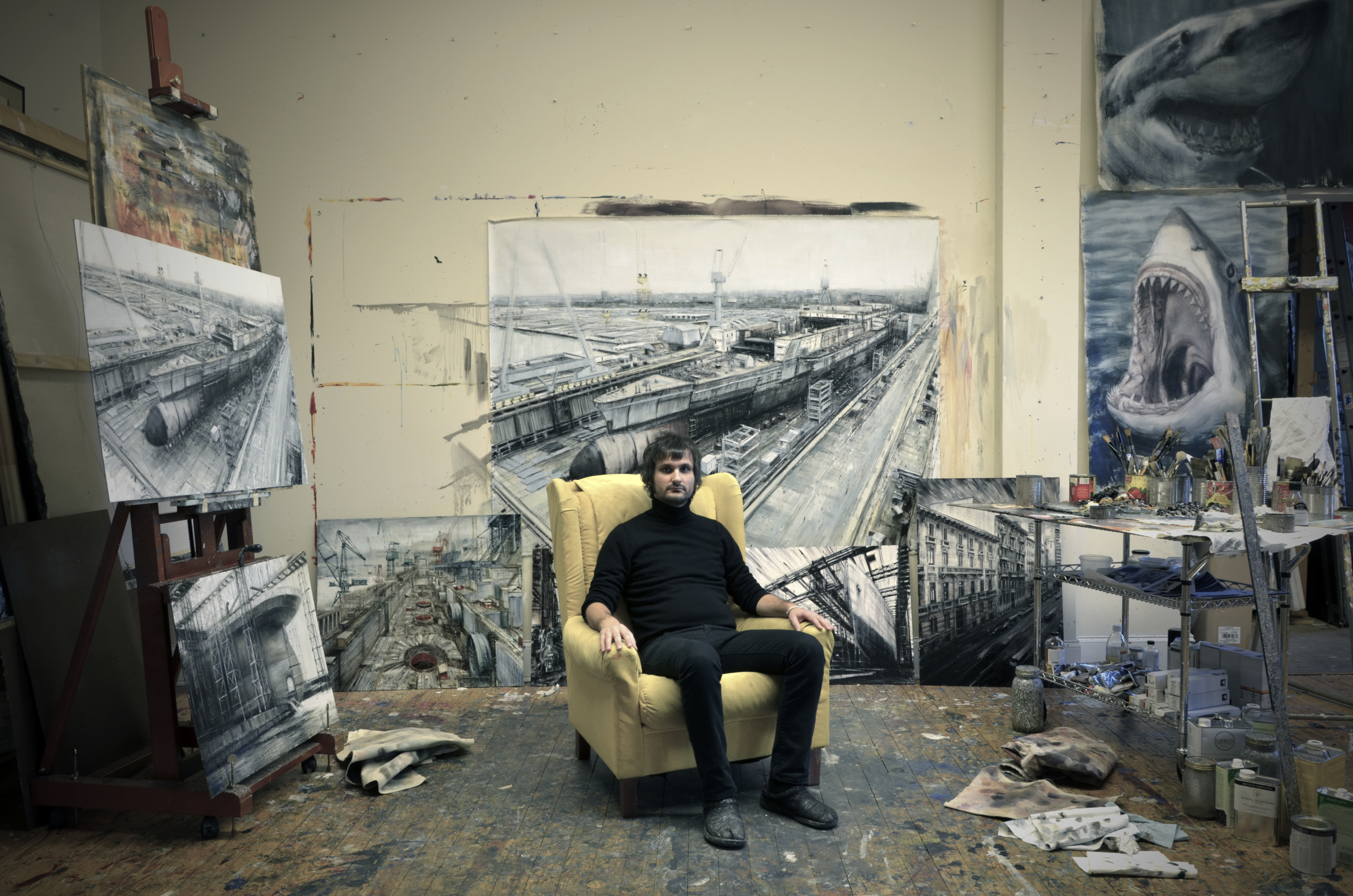
Portrait of Saboohi Khan

“I’ve been here forty years. I think this is my country now.”

14. and .16 IMG_0172

Photo: Saboohi Khan with her daughter Fariha Khan, who talks about her own experiences in another post. Photo by Jennifer Baker

My husband decided to come here from Pakistan in 1972. He was a pharmacist. We were already married and Fariha was two and a half. I had to follow him. I was confused and didn’t know where I was going to or what kind of people I would meet. I was twenty-one years old. We went to New York for one year, and then to Baltimore. He didn’t like pharmacist job, so he got a job with the pharmaceutical company Parke-Davis in Philadelphia and we bought a house in Media.

When we first came here, we came on Air France; it was a long flight, twenty-four hours. I saw people kissing in Frankford, Germany. They were saying goodbye to each other in the airport and kissing in public. It was the first time I had ever seen such a thing.

December 17, 1979, my husband passed away in a car accident. I decided to go back to Pakistan. He died in December and I moved in February. But I couldn’t stay there. Fariha was nine and her sister three. It was a hard time for her in school. She was a good student. But her teacher said she is American, she doesn’t speak right, and complained about her behavior. After three or four months, I came back again.

When I returned, I got social security. I stayed with a friend and rented an apartment. Good friends helped me to stand on my own feet, even taught me to drive. Fariha went to the same school and had the same friends. We became citizens a few years later.

Every summer we went to Pakistan. My sister is still there. After Fariha started college, it became harder to visit. Fariah’s friend often came with us in the summers. Eventually her friend and my younger brother decided to marry. They’ve been married 20 years, and she became Muslim. My parents came here for Fariha’s graduation from high school, college, and graduate school, and also, as it turned out, for her wedding.

Fariha met her husband in college, behind my back. I found out later. I was completely against it so she talked to her grandfather about it to convince me. My brother had lived in Canada since the 1960s. He wanted to meet the boy. They talked about soccer. He said to me, “Do you want your daughter to be happy?” Now, if anyone asks me which man to trust, I say my son-in-law. She was the first one in my community to marry a white person.

We planned the wedding while my parents were here. I ordered her outfit from Pakistan and it came on time. I rented a big hall and it worked out perfectly—the flowers, the catering. I believe God was with me and helped me.

When I first left, everyone was sad. There was no celebration. It was seven years before I went back again. It was hard to talk on the phone, hard to keep in touch. I’ve been here forty years. I think this is my country now. Some things I don’t like, like people living together before marriage. I was a very strict mother. No slumber parties, no dating. We do not sleep at other’s houses. I was a single mother. My girls didn’t argue.

My two daughters and their husbands came to dinner at my house every day for five years. We would tell about what we had done that day. This is how families stay close and people really get to know each other. After Fariha’s children were born, I moved in with them to help out and be closer to my grandchildren.

Portraits of People on the Move tells the stories of Philadelphia-area immigrants through their own words on the Supperdance.com blog and was first shown as an exhibition June 25–28, 2015, at the Gray Area of Crane Arts in Philadelphia. The exhibition was created as a companion work to Supper, People on the Move by Cardell Dance Theater, a dance inspired by themes of migration.
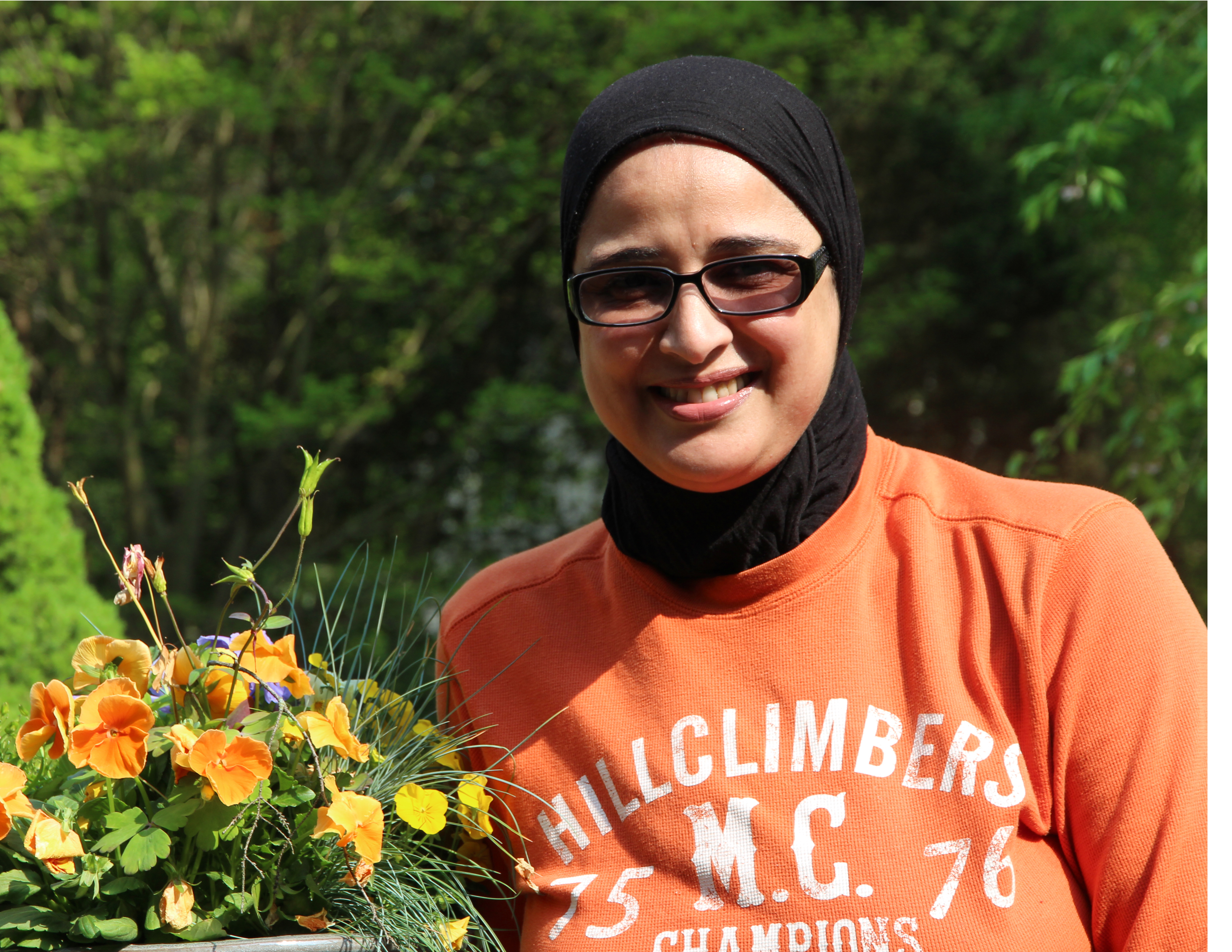
Portrait of Valerio D’Ospina

“It was never my plan to end up in the United States.”

Valerio D’Ospina is a visual artist. 

38. HR In the studioIt was never my plan to end up in the United States. This was one place in the world I never seemed to be interested in. When you grow up in another country, America is this great big ideal that seems almost too good to be true. I remember people talking about the American dream, and obviously the influence American culture has on the rest of the world, especially the entertainment industry, is momentous, but all the same, I never thought it was for me. As an Italian, I was fortunate to grow up in a beautiful sea-side town in Taranto with scenery that could shame the Caribbean and food most people can only dream of—especially the seafood. I received a solid education and attended an artistic high school that built the foundation and desire for my relocation to Florence to further my artistic studies. I received a BA and a MFA from the Accademia di Belle Arti in Florence, and am also fortunate to have no student debt to repay. This is another enormous advantage of being European. However, throughout the length of my studies, I met an American girl that altered the course of my life, and I soon began to think of the United States in a way I never had before.

Initially, I moved to be with the woman I love. It was not an easy decision, but it was the one that made the most sense. As an artist, I can work anywhere. She, like many Americans, had student loans that needed to be paid and consequently, it is much easier for young professionals to find stable work in the United States than it is in Italy. We moved from Florence to her hometown, a small town near Pittsburgh, Pennsylvania. It was a place where I had lived briefly before, while teaching a summer course at the local university, but I never imagined I would live there for five years. The day I took that departing flight from Florence, I knew I was moving, but I hadn’t really admitted to myself that it was permanent. To tell you the truth, I am still not sure it’s permanent. We think often about one day moving back to Italy. I was only legally allowed to remain in the United States at that time for three months, so I had a return ticket to show at immigration control, even though I had little intention of using it. I married that American girl, and after five years in that small town, where I also continued to teach drawing and painting, we moved to Philadelphia. At this point, the lengthy process of immigration attorneys and green card interviews was thankfully behind us.

I miss Italy every day. The food has been something that has been very difficult to get used to, along with many other small cultural nuances, but I also realize that my life as an artist would have never taken off the way that it has if I was still living in Italy, considering how poor the economy became after I moved. I am fortunate to have been influenced by two great societies and am constantly taking the best attributes from each culture and applying them to my life. I truly believe that moving to the United States, despite its difficulties, was ultimately the best thing for my wife and I professionally. We have made a good life for ourselves here and both continue to grow in our respective careers. In this aspect, it was absolutely worth it.

I laugh to myself sometimes that I moved from Taranto, Italy, to its only twin city in the world, Philadelphia. Taranto is a very industrial looking city with a large steel factory and one of the largest naval bases in Europe. If you take away the fact that it is also the coast of one of the most magnificent seas in the world, it looks very much like Philadelphia. My art has always been very industrially driven and I paint shipyards and navy fields frequently. I spend a lot of time here at the navy yard in Philadelphia, and in some strange way, I feel a sense of comfort and proximity to my childhood home when surrounded by all of those majestically large ships.

People ask me all the time where I would rather live, and it is a bit of a dichotomy in that when I am in the US, I am often full of nostalgia for my home in Italy; but every time we spend a significant amount of time in Italy, I can’t wait to return to my home in America.  I am lucky to have family and homes in both countries, but my wife and I both have built successful careers in Philadelphia, so it looks like that is where we will be staying. For now at least.

Portraits of People on the Move tells the stories of Philadelphia-area immigrants through their own words on the Supperdance.com blog and was first shown as an exhibition June 25–28, 2015, at the Gray Area of Crane Arts in Philadelphia. The exhibition was created as a companion work to Supper, People on the Move by Cardell Dance Theater, a dance inspired by themes of migration.
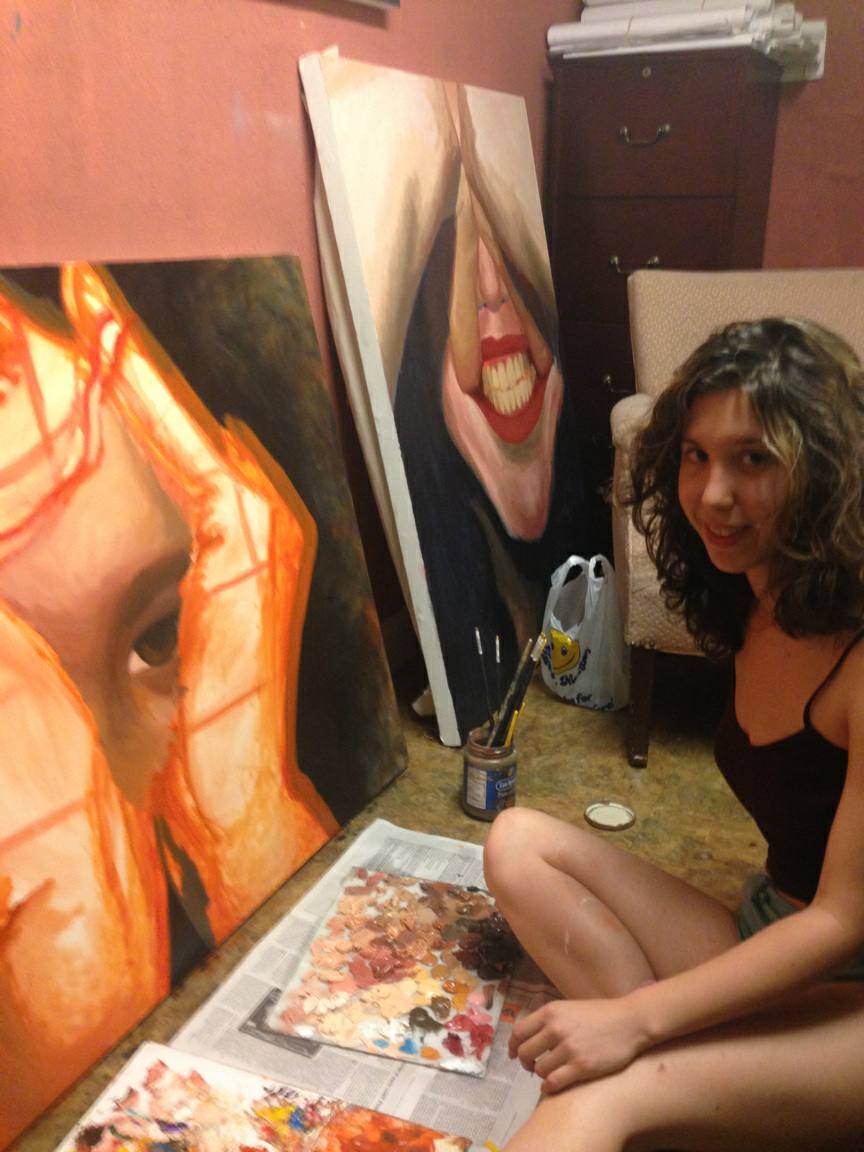
Portrait of Meryem Jariri

“I like to cook Moroccan food, couscous, lots of vegetables, with meat or chicken, but my kids like American food.”

Meryem Jariri is a nursing assistant.

15. IMG_0471aI left Morocco on April 22nd, 2000. I was married September 9th 1999. There was an immigration lottery program called a “Diversity Visa” and we applied and were selected. You have to have a high school diploma and a job to apply. Once we were here we could get green cards. My husband’s brother already lived in Maryland. We lived with them at first, but Maryland was expensive. We had many friends in Philadelphia, so we came here.

We worked so hard. I worked at Goodwill, and then I went to school to become a nursing assistant. We don’t feel like immigrants, there are lots of Moroccan people we know who live nearby. In 2004 I became a citizen.

In 2002, I had my first baby. We were so happy. My husband and I had to work and my mother-in-law came to help take care of the baby, so we would not have strangers looking after him, or have to pay for childcare. My mom came here in 2005 to help with my second baby for six months. For the third baby, they both came. In 2013 we applied for my mom to get a green card, so that she could come and stay any time. I have two sisters and a brother still in Morocco. We go to visit every three or four years.

I grew up speaking Arabic, French, and English. When we came to the U.S. I watched cable TV with captions and wrote down words or sentences that I wasn’t sure about. I watched movies and TV with a notebook and pencil to improve my English. I always tell people to do this. I feel bad for kids who grow up speaking only one language. My husband and I speak Arabic at home. My kids understand Arabic, but they reply in English. As soon as they started school they started speaking English all the time. I like to cook Moroccan food, couscous, lots of vegetables, with meat or chicken, but my kids like American food.

We are Moroccan and Muslim. Children should live with their parents, not with roommates. At night, children should be at home, not sleeping over at friend’s houses—where they might learn bad things. In Morocco, people live with their parents, the family is all together.

The day I left I was excited to come. I left my mother and everybody, but we were so happy. Then I see how hard life is here. I went back one year later to visit. This time I cried to leave again. Life here is very stressful. I never worked before I left home. Morocco is a very beautiful country. I could never go back though. Life, routines, are very different, and I am used to this routine.

When we left, my husband’s family and my family had a big party. We had a big dinner with Moroccan food—chicken marinated with cilantro, garlic, ginger, olive oil, lemon juice, and lots of onion. We had cake, fruits, soda, and Moroccan bread. Everyone wished us good luck. My sister gave a gift for memory. She gave me a necklace that I always wear. My uncle gave me a keychain that I use every day. My mom gave me American money. My brother-in-law in Maryland said don’t bring anything, but it turned out everything was so expensive here, so that wasn’t the best advice.

People in Morocco enjoy life more in the moment. People work 8:00 to noon and 2:00 to 6:00, the European system. Everyone goes home for lunch from work and school. It cuts down on stress. And families live all together, which makes life easier, with more people to contribute to a houshold.

Life here is really hard. College, clothes, everything is so expensive. When I lived in Morocco, everything is cash, no loans. Now we have house loan, car loan, etc. Now Morocco is more like the US in that respect. People always want more. But what is important, our family is all together—we have love.

Photo by Jennifer Baker

Portraits of People on the Move tells the stories of Philadelphia-area immigrants through their own words on the Supperdance.com blog and was first shown as an exhibition in June 2015, at the Gray Area of Crane Arts in Philadelphia. The exhibition was created as a companion work to Supper, People on the Move by Cardell Dance Theater, a dance inspired by themes of migration.
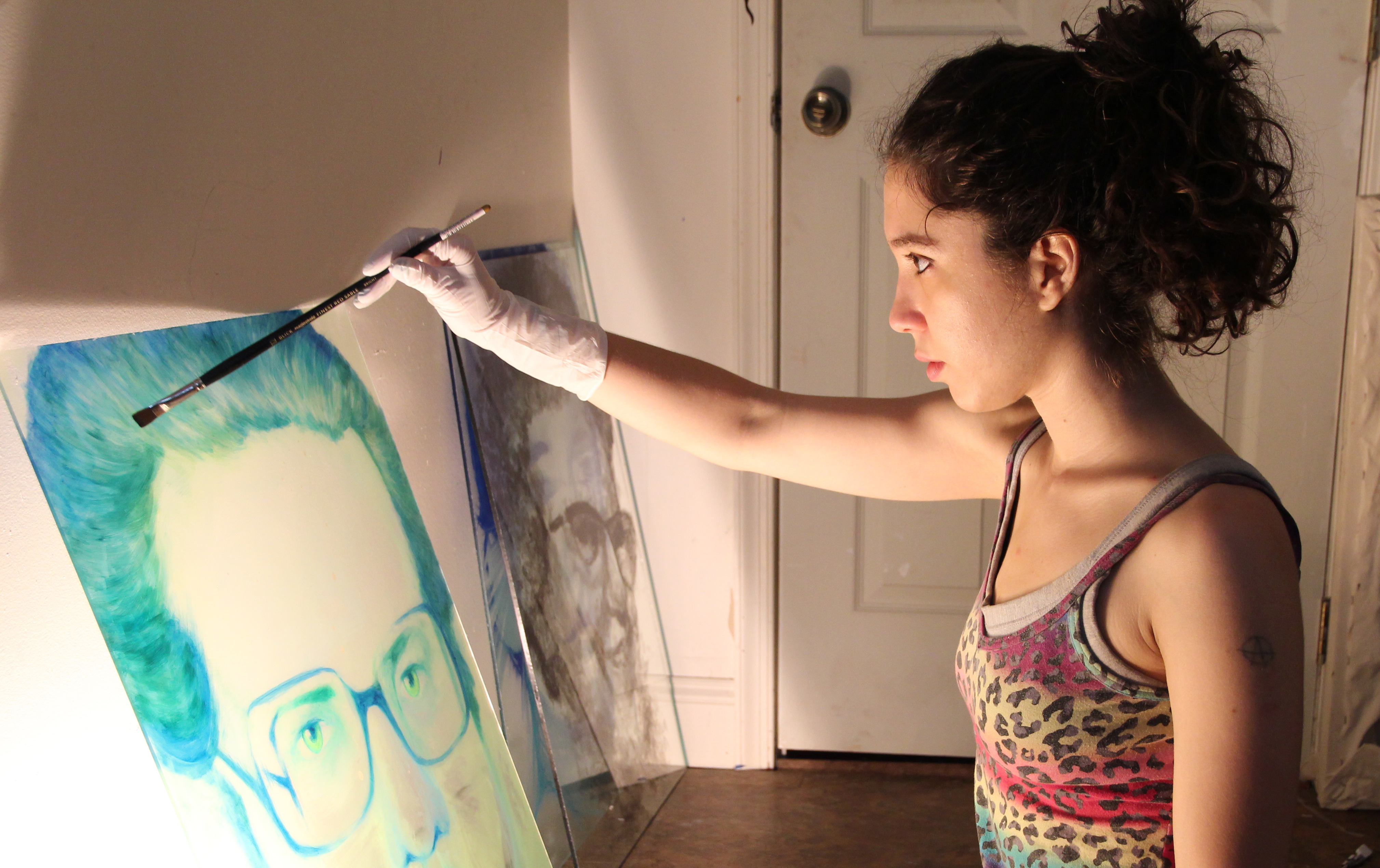
Portrait of Paula Meninato

“I never fully integrated into American society, I feel like this is temporary, but I feel like that everywhere.”

Paula Meninato is an artist from Buenos Aires, Argentina.

11. IMG_1263My family left Argentina after the economy collapsed and my mom got a fellowship at Temple University. I was nine. I remember before it happened feeling kind of detached. I remember I didn’t want to take anything because the people I was leaving behind were more important. I gave all my Barbies to one friend. The only thing I wanted to take was some jewelry that had been my grandmother’s.

The only memory I have of that day was crying on the plane, leaving my family behind. I had one good friend, Fiona, but I was really close to my cousin Damian, and two more cousins I was close to as well, Pancho and Toia. I was really sad about leaving cousins, uncle, aunts, grandfather, sad about leaving family.

I remember arriving in Philadelphia—it was the middle of the summer and it was winter in Argentina. We had travelled a lot so I was used to that. We had travelled to Uruguay, to the US, and to other places. I realized in college what a privilege it is to be able to travel and to be able to go to Argentina every year. I have spent a lot of time in Argentina—my brother and I would miss school in order to stay longer with our family.

Our original plan was to stay for three years and then go back. But the economy in Argentina was terrible and my parents lost faith in our country and its legal system. During that three-year time my dad had a job as an architect and my mom had a teaching job. My brother and I had become accustomed to being here and we had a house and everything. I kind of wanted to leave but I felt like whatever problems I had would be the same there. I felt like I never really established myself here. I always think about the next place I am going to. I went to high school in Swarthmore and didn’t settle in there, and then I went to school in Mexico for a while and I never settled in there either. It is a very Catholic country and at that time I was questioning my sexuality and that was not really acceptable there.

In college I took a semester abroad, but the school was too American. My fellow students just wanted to drink. I felt like I adjusted to Rome more than here, I connected to Italian culture. People had wide cultural understanding that they don’t have here. I feel like the idea that we are what we accomplish is an American idea, rather than to enjoy our lives. I’ve had a lot of help and I want people to value me for who I am and not what I have accomplished.

If I went back to Argentina I wouldn’t have much opportunity. I always consider Argentina to be my country—but not to live there. I never fully integrated into American society, I feel like this is temporary, but I feel like that everywhere. I was uprooted and my roots never took. I remember a painting I saw somewhere with roots that never settle into anywhere.

I never had a stable group of friends until now, which is the only reason for me to stay in Philadelphia. I want to see more and explore and have different experiences. And I want to make art too.

Was it worth it? I think moving here expanded my cultural understanding and I feel liberated that I don’t have to stay in one place. I can have unique experiences that a lot of people never have, but I can’t really stay in one place either.

The immigrant experience affects my artwork through my outlook. I don’t trust a single viewpoint. A lot of students accept everything they’re told, but I always want to prove them (my teachers) wrong. Being an immigrant affects the way I think, so at Tyler I did not try to make my work fit in. I learned a lot but I don’t need to change myself or my artwork to fit in, to be accepted.

I am making artwork about Argentina, for an exhibit at the Argentine Embassy in Washington, D.C., about the political disappearances in the 70s. I’ve been interviewing people who had relatives missing. What matters is that the disappeared person is a real person. I’ve been drawing portraits and I’m making them into glass. The finished work will be on the wall and each portrait will have the story attached to it and as visitors leave the exhibition they will be given a card with one person’s story on it. That one story will personalize the experience of all the disappeared. The military dictatorship that did this was supported by the US. Americans really need to take more responsibility for what their government is doing.

11. IMG_0633aPhotos by Jennifer Baker

Portraits of People on the Move tells the stories of Philadelphia-area immigrants through their own words on the Supperdance.com blog and was first shown as an exhibition June 25–28, 2015, at the Gray Area of Crane Arts in Philadelphia. The exhibition was created as a companion work to Supper, People on the Move by Cardell Dance Theater, a dance inspired by themes of migration.

Portrait of Ana Vizcarra Rankin

“I do not feel pulled by different cultures, so much as I feel like I am not part of any specific culture other that the art world.”

Ana Vizcarra Rankin is a painter, sculptor, and mixed-media artist.

41. el sur y yo

The author’s most recent World map with the South at the top .

We—my mom, dad, three-year-old sister, and I—moved from Uruguay to Oklahoma a few days before I turned twelve. My father had received a scholarship to pursue a masters in animal science at Oklahoma State University, and stayed to get his PhD.  Both my mom and dad are currently university professors in Alabama. I don’t remember much from the day I left, but I remember getting ice cream at our layover in Sao Pablo. It was my first time flying.

I do not recall a send-off meal, but we grilled half a lamb and a lot of beef earlier that year in celebration of our upcoming adventure.
My first two years after arrival were traumatic. Uruguay’s sixth grade education was significantly more advanced in the sciences and math, but I was held back due to the language barrier. Once I conquered English, I was moved to more challenging classes, but remained an outcast until well past high school graduation. Thankfully we “nerds” tried to stick together even back then.

Originally we had planned to stay only for the duration of my dad’s studies, but after he received a National Interest Waiver, the same document that was granted to Albert Einstein, I understood that our future would be better in the USA. Nonetheless, I desperately missed the ocean and moved to the East Coast as soon as I was able.

I do not feel pulled by different cultures, so much as I feel like I am not part of any specific culture other that the art world. Uruguay is a very diverse country, and my ethnicity is a mix of Welch, Portuguese, Polish and Austro-Hungarian. I have Catholic and Jewish family, but they are mostly scientifically minded and do not adhere to tradition.

I love Philadelphia, and there is nowhere else I would rather be, but my desire for travel and exploration is unquenchable. I believe that I am part of a new sub-culture of nomadic elites that act as ambassadors for global congruence. We may not be particularly affluent or privileged, but we live very rich lives.

Having gained a nuanced and broad perspective of society has simultaneously benefitted and caused me great heartache. For many years, I felt isolated because I do not fit within any particular ethnocultural stereotype. Then I found out that there is an entire population of expatriates, immigrants, and neo-nomads with complex backgrounds that feel equally disenchanted with these narrow societal confines. I believe that the diverse and culturally abundant Philadelphia environment is responsible for helping me discover this.

I have identified as an artist since my earliest childhood memories. I have never deviated from my path in that regard. While in Uruguay, I received an exceptional art education during my primary school years, and in Oklahoma I was blessed with an incredibly nurturing art teacher while attending Stillwater’s only public high school. The so-called immigrant experience has informed my work in ways that were not as apparent to me until I finally qualified for financial assistance and could obtain my BA in art history and my MFA, where I was encouraged to unpack the effect of my origins.

Portraits of People on the Move tells the stories of Philadelphia-area immigrants through their own words on the Supperdance.com blog and was first shown as an exhibition June 25–28, 2015, at the Gray Area of Crane Arts in Philadelphia. The exhibition was created as a companion work to Supper, People on the Move by Cardell Dance Theater, a dance inspired by themes of migration.

Portrait of Angela Navarro

Interview translated from Spanish. Angela is applying to be a US citizen. 

21. Angelaa

Photo by Pablo Meninato

My parents came to the US from Honduras nine years before I came here. My brother and sisters and I lived with our grandparents during that time. My mother came in 1994, my father a year later. They came for economic reasons, to be able to work. These nine years without my parents were very difficult for me and my brother and sisters. We all missed the joy of sharing many important moments.

I was 16 when I came here, the last of my siblings to leave. I was seven months pregnant, and came with my boyfriend. After crossing the border of Honduras,

We crossed through El Salvador, Guatemala, and México. Although we traveled by car, for me it was very uncomfortable because I was pregnant. I also feared having to travel with the coyotes, men who were strangers to me. Making stops of days or weeks in each county, it took us a month to get to the border.

The person in charge of crossing us to the other side took us one morning to the river; he sat me on an inflated tire, with my boyfriend walking next to me. Thank God that day the river was not dangerous.

After crossing the coyote left us and told us to look for immigration agents. He told us we should tell them we were siblings since I was not 16 years old yet and they could charge him and send him to prison. I was seven months pregnant I would not be able to walk across the desert.

Everything went well, thank God. They gave us a temporary permit for three months to meet my parents, and let us go. However, after leaving the office we didn’t know what to do, since we didn’t know where we were. With God’s blessing at that point we ran into a guy who was coming to renew his permit, and he took us to the refuge center for people that have crossed the border where he was staying.

At night, we decided to leave that place because we were afraid—there were all sorts of people! We finally managed to take a bus. During the three days it took to reach Philadelphia, we only ate crackers: we feared getting off the bus and asking for food since we didn’t know any English. Those three days without eating were the most difficult ones of my pregnancy!

After three months, I had an interview with an immigration officer, and was told to leave the country. I got a lawyer to help me to ask for an extension, but I never found out if it was granted. I came in 2003. My son was born here, and two years later my daughter. Later I was told there would be no extension, and I thought about going back, but my parents were here, and my children. A short time after my daughter was born, they came to look for my boyfriend, but he was not home, so they grabbed my uncle and brother-in-law instead. They were incarcerated for a long time and then deported. For me, if I waited until my son turns 18, he could apply for me to stay.

There was always the risk of deportation. In 2010, because of Facebook, they sent a letter ordering me to leave the country, a letter in English. After that I moved from place to place so as not to be found. I have four sisters and one brother. They all got into trouble because of my deportation order, put into the spotlight because of me. We all moved from place to place together.

My mother has been involved in the New Sanctuary Movement for seven years. People from the Sanctuary Movement suggested that I could stay in a church, but I thought this was not a permanent solution, that I would be illegal forever. It was a long process and I asked different people, but I decided to come forward and take this action. In November 2014 I moved into the West Kensington Ministry. Many clergy members are part of the network of the Sanctuary Movement.

I never thought this would be a big deal. I thought it was a safe place to stay in the church while finding a legal solution to be able to stay with my children. I did not think this action would get so much publicity, but it really attracted attention to the deportation of people with similar stories, people who have families here who are being deported, families that are being separated.

The publicity did help my situation. I was granted a “stay of removal” which stopped the deportation order, and I was given a work permit. My husband is an American citizen, but because the deportation order was from before our marriage, it was not lifted when we married. Now they will look at my marriage license and I will have a better chance to stay here. Because of the publicity, a lawyer heard of my case and offered help. She helped me get the work permit, and hopefully I will get a green card. She is helping me to apply to become a citizen. My parents have permits to stay and to work, which they have to renew every few years, but they are not citizens. When they came here the rules were different. I came after 9/11 and the rules have become much harsher.

I remember the day I left, crystal clear. It was February 14, 2003. My grandmother and aunt took me to the bus station to say goodbye. I knew I would not see them again. I do not remember any special goodbye meal, but I was pregnant and remember that I craved melon and mango a lot.

I remember when I arrived—I got off the bus in Philadelphia—I couldn’t wait to see my mother. I started crying. I had not seen her in nine years. My mother said if I had not stood up to meet her she would not have recognized me, but I recognized my mother.

New Spanish Translation by Amalfi Ramirez Finnerty.


Angela Navarro

Mis padres vinieron a los Estados Unidos desde Honduras nueve años antes de que yo llegará aquí. Mi hermano y hermanas y yo vivimos con nuestros abuelos durante ese tiempo. Mi madre vino en 1994, mi padre un año después. Vinieron por razones económicas, para poder trabajar. Estos nueve años sin mis padres fueron muy difíciles para mí y mis hermanos. Todos perdimos la alegría de compartir muchos momentos importantes.

Tenía 16 años cuando vine aquí, la última de mis hermanos en salír de Honduras. Tenia  siete meses embarazada y vine con mi novio. Después de cruzar la frontera de Honduras, cruzamos a través de El Salvador, Guatemala y México. Aunque viajamos en automóvil, para mí fue muy incómodo porque estaba embarazada. También temía tener que viajar con los coyotes, hombres que eran extraños para mí. Haciendo paradas de días o semanas en cada condado, nos llevó un mes para llegar a la frontera.

La persona a cargo de cruzarnos al otro lado nos llevó una mañana al río; me sentó en una llanta inflada, con mi novio caminando a mi lado. Gracias a Dios ese día el río no estaba peligroso.

Después de cruzar el coyote nos dejó y nos dijo que buscáramos agentes de inmigración. Nos dijo que deberíamos decirles que éramos hermanos porque yo tenía 16 años y lo podrían acusar y enviarlo a prisión. Tenia siete meses embarazada y no podría cruzar el desierto.

Todo fue bien, gracias a Dios. Nos dieron un permiso temporal durante tres meses para conocer a mis padres y nos dejaron ir. Sin embargo, después de dejar la oficina, no sabíamos qué hacer, ya que no sabíamos dónde estábamos. Con la bendición de Dios en ese momento nos encontramos con un tipo que venía a renovar su permiso, y él nos llevó al centro de refugio para las personas que han cruzado la frontera donde el se alojaba.

Por la noche, decidimos dejar ese lugar porque teníamos miedo, ¡había todo tipo de personas! Finalmente logramos tomar un autobús. Durante los tres días que tardó en llegar a Filadelfia, solo comimos galletas saladas, temíamos bajarnos del autobús y pedir comida ya que no sabíamos nada de inglés. ¡Esos tres días sin comer fueron los más difíciles de mi embarazo!

Después de tres meses, tuve una entrevista con un oficial de imigración y me dijeron que abandonara el país. Conseguí un abogado para ayudarme a pedir una extensión, pero nunca supe si fue otorgada. Vine en 2003. Mi hijo nació aquí, y dos años después mi hija. Más tarde me dijeron que no habría extensión, y pensé en volver, pero mis padres estaban aquí y tambien mis hijos. Poco tiempo después de que nació mi hija, vinieron a buscar a mi novio, pero él no estaba en casa,  y en vez por agarrón a mi tío y a mi cuñado. Estuvieron encarcelados por un largo tiempo y luego deportados. Para mí, si espero hasta que mi hijo cumpla 18 años, el podría solicitar para que me quede.

Siempre existía el riesgo de deportación. En 2010, a causa de Facebook, enviaron una carta que me ordenaba salir del país, una carta en inglés. Después de eso, me mudé de un lugar a otro para no ser encontrada. Tengo cuatro hermanas y un hermano. Todos se metieron en problemas a causa de mi orden de deportación, y los pusieron en el centro de la atención, llamandoles la atención por mi culpa. Todos nos mudamos de un lugar a otro juntos.

Mi madre ha estado involucrada en el Movimiento Nuevo Santuario durante siete años. La gente del Movimiento Santuario sugirió que podía permanecer en una iglesia, pero pensé que esta no era una solución permanente, que sería ilegal para siempre. Fue un proceso largo y le pregunté a diferentes personas, pero decidí presentarme y tomar esta medida. En noviembre de 2014, me mudé al Ministerio de West Kensington. Muchos miembros del clero son parte de la red del Movimiento Santuario.

Nunca pensé que esto sería un gran problema. Pensé que era un lugar seguro para permanecer en la iglesia mientras encontraba una solución legal para poder quedarme con mis hijos. No pensé que esta acción fuera tan publicitada, pero realmente llamó la atención sobre la deportación de personas con historias similares, personas que tienen familias aquí que están siendo deportadas, familias que están siendo separadas.

La publicidad ayudó a mi situación. Me concedieron una “suspensión de deportación” que detuvo la orden de deportación y me dieron un permiso de trabajo. Mi esposo es ciudadano estadounidense, pero como mi orden de deportación era anterior a nuestro matrimonio, no se suspendió cuando nos casamos. Ahora verán mi licencia de matrimonio y tendré una mejor oportunidad de quedarme aquí. Debido a la publicidad, un abogado se enteró de mi caso y me ofreció ayuda. Ella me ayudó a obtener el permiso de trabajo, y espero obtener una tarjeta verde. Ella me está ayudando a aplicar para ser ciudadana. Mis padres tienen permisos para quedarse y trabajar, lo cual tienen que renovar cada pocos años, pero no son ciudadanos. Cuando llegaron aquí, las reglas eran diferentes. Yo vine después del 11 de septiembre y las reglas se han vuelto mucho más duras.

Recuerdo el día que me fui de Honduras, cristalino. Era el 14 de febrero de 2003. Mi abuela y mi tía me llevaron a la estación de autobuses para despedirse. Sabía que no los vería de nuevo. No recuerdo ninguna comida especial de despedida, pero estaba embarazada y recuerdo que anhelaba mucho el melón y el mango.

Recuerdo cuando llegué, me bajé del autobús en Filadelfia, no podía esperar para ver a mi madre. Empecé a llorar. No la había visto en nueve años. Mi madre dijo que si no me hubiese puesto de pie para conocerla, no me habría reconocido, pero yo si reconocí a mi madre.

Portraits of People on the Move tells the stories of Philadelphia-area immigrants through their own words on the Supperdance.com blog and was first shown as an exhibition in June 2015, at the Gray Area of Crane Arts in Philadelphia. The exhibition was created as a companion work to Supper, People on the Move by Cardell Dance Theater, a dance inspired by themes of migration.

Portrait of Giovanni Casadei

“I didn’t want to recreate Italy here.”

Giovanni Casadei is a painter and teacher.

13. Giovanni MG_0171

Photo by Jennifer Baker

My father was a barber, my grandfather was a barber. My mother was a homemaker. She waited on the balcony each evening for my father to come home with money for the next day’s food. That was the way it was. My mother and father wanted me to be able to get a job so I studied chemistry in a technical high school.

Every Sunday Uncle Roberto, my father’s older brother, would take me to museums. He was a sheet metal worker. I saw all the museums in Rome because of his dedication. At the Galleria Borghese there was a huge Caravaggio, it came all the way down to the floor. I was little and I could look at it at my level. I remember seeing Velazquez’s painting of the Pope. We went to all the small private galleries. I would copy paintings from books. At fourteen, I bought oil colors and painted at the kitchen table from photos and postcards of paintings. My first painting was from a photo of the Brooklyn Bridge with a tugboat. I spent a lot of time drawing pen-and-ink fantasy drawings, instead of playing soccer.

After I graduated there were no jobs, so I did house painting. The only way to find a job was if you knew someone. When I was twenty, I had a girlfriend who was studying at the Academy of Fine Arts in Rome, and I found a free class to paint and draw from the model. Schools were free—all you had to do was get in.

My first contact with an art teacher was at Scuola Libera del Nudo. Alfonso Avanessian was my teacher for five years. He told me to apply to Academy of Fine Arts. I had a tech degree, not liceo artistico which meant that I had to take a state exam to qualify. There were five days of exams and I had to produce a portfolio. I got in but only went for one year. In the first year, we only painted once a week. To fulfill the curriculum we also studied etching, cast making, and anatomy. The Academy had a conservative mentality and I was impatient—I just wanted to paint. I went back to la Scuola Libera del Nudo and back to my teacher, Alfonso, who was very open.

While I was at the Academy, I met Nancy, who eventually became my wife. She was studying at Tyler in Rome, which was just behind the Academy. My father was diagnosed with cancer in 1982 and died in 1983. Just after he died I was sitting in a park with a friend and I just didn’t know what to do. Nancy wanted to go to the U.S. My friend said “there’s nothing for you here, you should go.” I had to get a fiancé visa, which would last for three months. It took six months to get the visa. I had an interview, a medical exam; it was a long process. I didn’t see a future in Italy, which was struggling financially. The political landscape was bad. Italy was living on American popular culture. My mother knew all American actors, watched American movies on TV. We got a TV in 1968 and fridge too. The U.S. reputation was to be free, to do what you want. I was fascinated.

I came to the U.S. on December 1, 1983. I was twenty-seven. I got married after three months. I only knew a few words of English. I worked for Tom Judd as a house painter. I had to go to school to learn English. I went to the Nationalities Service Center. There were good teachers there. The director knew how to say good morning in every language. I got my green card after getting married.

I would go to Italy every year, as long as my mother was alive. I still have friends in Rome, I am closer to them than to my cousins. With my cousins, our way of thinking became so different that we don’t relate very well.

I took night classes at PAFA (Pennsylvania Academy of the Fine Arts). I studied with Murray Dessner, Seymour Remenick, and also studied at Fleisher. There was a network of people helping each other within the artist community. Things didn’t work out with Nancy and eventually we got divorced. I started full time at PAFA in 1988 and worked as house painter in the evenings and summer. Then I got scholarships and I could work all day and night at PAFA.

I don’t remember the day I left Italy, but I remember my arrival. I landed late in the afternoon in New York and Nancy came to pick me up in a car. I was so surprised to see the huge highway, I-95, New York to Philadelphia—in Italy a highway has two lanes—and to see so many women driving cars! Not many women drove in Italy. Women stayed home, took care of family. We crossed the Ben Franklin Bridge at night. It was quiet with no traffic. Quiet, no traffic, tiny streets, so quiet and we could see the whole city. Nancy had an apartment at 9th and Spruce. It seemed like a little fairy tale town. Row houses in the city seemed strange. Rome is all big apartment buildings, dense traffic, smog.

I wasn’t sure if my move was permanent. I didn’t know how Nancy and I would work things out. In this country, there is mobility of people who work. In Italy a job is for life. I’d never heard of part-time jobs. After graduating from high school, I took a test for a low hospital job and after hearing nothing for three years, I got a job offer. My mother couldn’t believe I turned it down. My parents and sister were furious that I turned it down. When you get job it is for life. If you work for the government, no one will ever fire you. Job security was valuable—but for me it was a death sentence.

When I lived with my mother she cooked, barely allowed me to make coffee. Here I learned to cook, it was a connection to my country. I would call my mother and ask her how to make a dish I wanted to cook. I never felt I belonged only to Italy or to the U.S. I do not make that distinction. I am myself and I like where I live. I never felt out of place. I have an accent and my English is a bit sketchy. My understanding was not great for a long time. I knew I had to make adjustments and learn more English but I never felt out of place.

Nancy’s family were Main Line WASPs. They weren’t happy. We had a protestant wedding. It went completely over my head. I smiled and didn’t understand anything. She translated what was going on for me.

I knew I had to learn to speak English. I couldn’t care how I sounded or I would never learn. No matter how many times I failed I just had to keep trying. I had a constant headache for two years, trying to figure out what people were saying. I turned down a job for an Italian house painting company. I didn’t want to recreate Italy here.

Italian translation (excerpt) by Giovanni Casadei


Giovanni Casadei

Mentre studiavo all’ Accademia di Belle Arti a Roma, Ho incontrato Nancy che poi divenne mia moglie. Nancy a quel tempo studiava a Tyler School of Art a Roma. Mio padre nel 1982 ha scoperto di essere malato di tumore e muore nei 1983. Dopo qualche giorno la morte di mio padre, stavo seduto in un parco con il mio amico, ero perduto emotivamente e non sapevo cosa fare nella mia vita. Nancy voleva che andassi negli Stati Uniti con lei, ero molto indeciso. Il moi amico mi disse, ” Non c’e’ niente per te qui in Italia, devi andare”.

Non mi ricordo la mia partenza dall’Italia, ma mi ricordo l’arrivo negli Stati Uniti. Ho atterrato a New York JFK aeroporto, Nancy venne a prendermi con la sua automobile. Sono stato cosi sorpreso dall’autostrada I95 da New York a Filadelfia, autostrade con molte gareggiate mentre in Italia ero abituato ad autostrade solo a due gareggiate, e vedere molte donne dietro al volante. Nel 1983 non erano molte donne che guidavano in Italia. Le donne Italiane stavano a casa ad accudire la famiglia. Attraversammo il Ben Franklin Bridge a sera inoltrata. Filadelfia era quieta, silenziosa, non c’era traffico, strade a senso unico, potevamo vedere tutta la città dal ponte che stavamo attraversando. Nancy abitava in un appartamento sulla Nona strada e Spruce. Filadelfia mi e’ apparsa come un paesino da favola.

Non ero sicuro se la mia visita era permanente. Non ero sicuro se Nancy ed io potevamo ristabilire la nostra relazione che avevamo in Italia. La famiglia di Nancy erano dalla “Main Line WASPs”. Non erano molto felici della nostra unione. Abbiamo avuto un matrimonio Protestante. Mi sentivo cosi perso al mio matrimonio ( perché non parlavo inglese bene e non potevo capire). Sorridevo e non capivo quasi niente. Nancy era la mia traduttrice personale.

Per due anni ho avuto un mal di testa costante, per capire cosa mi dice la gente in questa lingua straniera. Ho rifiutata di lavorare per una compagnia di imbianchini italiana. Non volevo ricreare l’Italia qui in America.

Portraits of People on the Move tells the stories of Philadelphia-area immigrants through their own words on the Supperdance.com blog and was first shown as an exhibition June 25–28, 2015, at the Gray Area of Crane Arts in Philadelphia. The exhibition was created as a companion work to Supper, People on the Move by Cardell Dance Theater, a dance inspired by themes of migration.

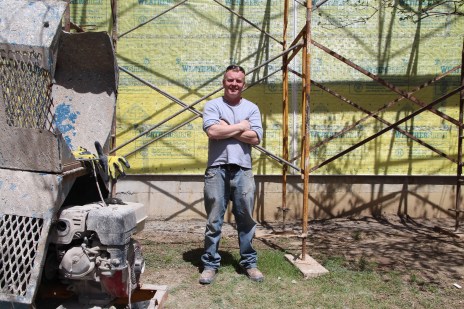
Portrait of Martin Gallagher

“My mother wants me to go back, but I won’t, but I don’t tell her that.”

Martin Gallagher is the owner of Northeast Stucco Inc.

26. IMG_0391Martin Gallagher

Photo by Jennifer Baker

I came to this country in 1994 when I was 20 years old. I am the oldest child and only son, from a small farm in the hills of Tyrone in Northern Ireland.

My father was a contractor, farming was his side job. We raised pigs and other animals and could sell an animal if we needed pocket money. We did all our own maintenance on our farm, and my grandfather lived with us too. He taught me to do a lot. My mom was psychiatric nurse in a hospital in Omagh.

I got involved in the troubles and a bunch of my friends were shot. The violence came too close. A lot of sons were getting killed. People respected families who lost their sons defending their country, and still do. Where I lived was a war zone. The front lines moved—it was a guerrilla war. I saw friends get killed. In my town, Sixmilecross, the population was 50/50. People tolerated each other, at least until they were behind closed doors.

I went to Belfast to go to college. There was an incident in a bookshop and the Loyalists killed everyone. After that my mom made me come home. Normal life wasn’t normal, but it was what I grew up with. There would be a bomb attack and it wouldn’t even be on the news, it was so common. I lived a few miles from Omagh where there was a bomb that killed 28 people. The troubles started the year I was born. We thought we were bullet proof. All that hatred is not healthy. The police and the army were dangerous. Here the police are not going to kill us.

I had an opportunity to play football (Gaelic football) semi-pro with Kevin Barry GFC in the US for the summer of 1994. Things got worse at home and my mother thought it might be better for me to stay. A bunch of the team stayed, about twenty percent. I managed to get cash jobs and kept under the radar. Then I met a girl and that was it. We got married and had kids. Getting married enabled me to stay. It was ten years before I went back. During that time, we talked on the phone and we could Skype, but there wasn’t always coverage, and still isn’t sometimes. I have four kids 18, 14, 10, and 2. My first wife was born here; her family was all here so they helped out. My second wife is from Dublin so neither of us has family here, which makes it harder. I went to Strayer University and studied computer management and computer science. I was a student athlete so it was easier.

I started to work for myself, small jobs, and then started getting more jobs and hired more people. The guys I work with are all from Tyrone. I knew some of them back home. We stick to our own.

My first impression was the heat and the vastness of this country. It is so flat. I lived in the mountains at home. You don’t understand how pretty it is until you leave. There is a lack of stress back home. Here life is motivated by the need to get ahead and make money. In Ireland you can step back and look at a problem, if it doesn’t get done today it will get done tomorrow. Time is money here. Back home, if you go to someone’s house you have to eat, have tea. If you refuse that would be rude.

I don’t get to go fishing as much here. There was a river behind our house, and I miss that. Was it worth it? I kept out of jail and stayed alive, but I miss home. My mother wants me to go back, but I won’t, but I don’t tell her that.

Portraits of People on the Move tells the stories of Philadelphia-area immigrants through their own words on the Supperdance.com blog and was first shown as an exhibition June 25–28, 2015, at the Gray Area of Crane Arts in Philadelphia. The exhibition was created as a companion work to Supper, People on the Move by Cardell Dance Theater, a dance inspired by themes of migration.