Portrait of Bashkim Kokona

“The conditions were very harsh for health and well being. It was not a good place to work.”

Bashkim Kokona, from Albania, is a research associate at Haverford College.

22. Kokona DSC02419-2I am one of six brothers. When the Berlin wall fell, there was a tectonic shift in Albania, not as drastic as in East Germany but it had a huge effect on the country. I finished my degree in geology and worked in a chromium mine in northern Albania. The conditions were very harsh for health and well being. It was not a good place to work.

I left Albania in 1990 for one year and went to Greece and worked as a waiter. It was good money for the time being. Then I went back to Albania with the idea to invest in a business with my brothers. One brother is a carpenter, and we built a shop and apartments above it. In 1992 I wanted to go back to Greece. Some of my soccer friends worked in the German Embassy charged with the security of the embassy. I asked them for help with the visa application. I went to the German embassy and asked for help to get a visa. Instead I was offered a translator job in the visa section because I spoke German. I worked there for five years.

In 1996 I got engaged. My fiancée’s family had emigrated to the US via visa lottery system. My fiancé and her sister were both over 21, so they could not go along with their parents to the US. Her sister, who is in a wheel chair, got a medical visa. My fiancée and I and got a visitor’s visa, planning to go along with her sister and visit her parents for two weeks.

While we were visiting in the US, the Albanian economy collapsed and the country fell into chaos. My co-workers at the embassy were being air lifted out by German bundeswehr. We decided not to go home. I went from a visitor’s visa to a student visa. I had always wanted to be a doctor. It had not been my decision to study geology. Only one in three persons in a family was allowed to go to university. I had two older brothers who already went to university, so our quota was filled. There was an opening to study geology so I took it.

In the US, I went back to school and studied biology at Drexel University, and graduated in 2002. Biology was closest to my interest in medicine. The stress of living with my fiancée’s family added to disagreements so I parted ways with my fiancée. In 2000, I was at a tennis tournament in Upper Darby, where I met my wife Helen. We met playing tennis and lived together for a year, then got married in 2002.

On Sunday mornings, we like to drink coffee and read the Inquirer. I saw an ad for a job at Haverford College in a structural biology lab. In 2003 I became research assistant there. I love my job doing research and working with students. I got my masters degree in chemistry at Bryn Mawr in 2008, while still working full time at Haverford.

My brother who is a carpenter and his family moved here in 2008. His daughter just graduated from Drexel and wants to go to medical school and his son is studying business at Temple University. Another brother works in Belgium, in Brussels, for Eurocontrol. I have three other brothers still in Albania. One is an attorney, one works at the airport, and the other can’t work.

Am I pulled by different cultures? This is the dilemma. I am not an introvert, I dive right into society. Here life is more work oriented. Friends are from work or business. Family time is not as important. There, family and friends spend a lot of time together and nothing is planned, life is more casual. That part of life is much more easy going. But the difficulty is with the economy.

When my mother passed, we all went back. I stayed for ten days, and tried to give a hand. I saw the family pulling it together in such hard times, and l saw the passion. Family is the center of people’s lives. Being there reconnected me again to something that over time had lost. We get lost here with work, and as a result forget what is most important. I try to strike a balance between work, family and friends.

This country is great for people from all over. People in this community come together on Sunday mornings to play soccer. There is not as much segregation between communities, that is something rare here.

Portraits of People on the Move tells the stories of Philadelphia-area immigrants through their own words on the Supperdance.com blog and was first shown as an exhibition June 25–28, 2015, at the Gray Area of Crane Arts in Philadelphia. The exhibition was created as a companion work to Supper, People on the Move by Cardell Dance Theater, a dance inspired by themes of migration.

Portrait of Sarah

“I am 21, and I have not felt safe for my whole life.” Some details of Sarah’s story have been changed to protect her identity.

18. IMS IMG_0333

Photo by Jennifer Baker

I am 21, and I have not felt safe for my whole life.

Saddam Hussein targeted my family—we are Shia. His army came to our house and broke in, my father was arrested three times and tortured in prison. We couldn’t say publicly that it was Saddam Hussein who did that, and my mother would say to us, me and my sisters and brothers, that he was a good leader, in order to protect us from him. In 2003 there was war. I always say I have mixed feelings about the war: the US saved us from Hussein, but it was war and it was terrible, but we made it through alive.

I was nine years old at that war. In 2006 I was kidnapped. After I was returned, my father decided we should leave the country, and we went to Syria. We lived there for three years as refugees. Things were getting worse in Syria also, it was the beginning of the war there, my family was poor, and we had no choice but to return to Iraq, which was nothing but bombs, kidnapping, and violence everywhere.

I wanted to educate myself more about my religion, and began reading the Quraan. I started to read about other religions as well. I felt that I was in an Iraqi Muslim bubble; I really wanted to see the world outside that bubble. I wanted to learn more about other people, so I started to teach myself English by watching movies. I wanted to be able to use the internet to talk to other people. We had internet in 2011. I watched movies and try to speak with people of other faiths. I realize we all have things in common. I remember my teacher says Jewish people are evil and Christians do not follow the right way but I read in Quraan to respect Jews and Christians. I ask my father, I said you have a Christian friend and he is kind. My father said, “Do you believe teacher or Quraan?”

At fifteen I started reading everything I could to better understand the world—not considered a good thing for girls to do. My father did his best to get books I wanted to read. I started to talk to friends saying that we should give minorities in Iraq their rights. I received many bad comments but I kept going. I made an effort to understand the hostility between Sunnis and Shiiaes. I went to the University of Bagdad. My immediate family was happy for me, my extended family was not happy with what I was doing. Because of my activism, I was selected by the US Embassy for a summer program to study in the US. Five students from Iraq were chosen, twenty students altogether from the Middle East. We studied religion, American democracy and American history at an American university.

It was my first time visiting other places of worship. We visited churches, synagogues, a Buddhist temple. I posted photos of different places of worship online trying to tell my friends, “Look, I worshiped in other places, we are all the same. I have the same feeling as in mosque.” A militia group in Iraq—so prejudiced—think only Shia will go to heaven so I was against them from the beginning. They saw my posts and knew I talked to others and would continue to do so. They told my father your daughter is a spy for the US and she is not a good Muslim. She is dangerous and should be killed, and so I couldn’t go home. If she comes home we will kill her, she should stay with kuffar (Arabic insult for nonbelievers). My father, in order to save his life and the rest of my family, said he did not support me and I was wrong.

Because I believe that all these problems are because of prejudice, I believe we should have a secular government. They try to stop me but I will not stop. I think religion is personal. We don’t have to be the same, but we do have to find a way to live together. I was freaking out, so worried about my family and worried about myself in a new country alone. My friend Jacob said don’t worry I will help you. His parents found a lawyer for me who took my case for free. His parents got me a cell phone and gave me money and found me a family to live with. I have lived with them for six months and they treat me as one of them.

The asylum process is very long. I have a lawyer, wrote my story, had fingerprints taken, and I will have to go before a judge who will decide. I can’t work, and I want to go to school but I can’t get financial aid and I do not have money. My family is trying to get out of Iraq to go to India. Jordan is not taking refugees any more, and neither is Turkey. It is not easy to get a visa: to come here it takes at least five years. I could apply for my family if I had a green card. If my asylum is approved, and there is no way to know how long before I get a hearing, it is then one more year to get a green card. Then I can apply for my parents and siblings under eighteen. The two older ones couldn’t qualify.

How can I describe being here? I am happy to have freedom that I didn’t have in Iraq. I can go to where I want, to places of worship. I can meet people from other places; it is very diverse. Another part of me is really sad. I can’t go home again. I put my family in danger. I know that I didn’t do anything wrong, but people don’t understand. I go to the social service agency to try to help refugees. The US Embassy program has two groups per year. I was an intern for the group that came after me. I don’t have to sit alone in secret when I want to read. I go to interfaith groups to try to create more dialog to understand each other. I am trying to get into school. I visited Community College but it costs $1300. per class. I want to study architecture. Baghdad has been destroyed by bombs and war. I want to help rebuild. And someday I want to build a place of worship where people can worship together no matter what religion they are.

When I call my family, I miss them so much. I don’t show them, but then I cry and cry. I miss my traditions—sitting on the ground to eat, not in a chair. I miss going to my grandparents’ house every week. People don’t do that here. Families live far apart. My extended family thinks I am terrible. I pray for the day when they can accept me. I also pray for the day when Iraqis wake up to the sounds of birds, not bombs. In Iraq our lives are so cheap. Three hundred people die every day from bombs. In the US my life is more important. I had a tough life and I don’t want others to go through what I have, so I want to work for peace.


Arabic translation (excerpt) by Sarah

ساره

العراق

في عمر ال١٥ بدأت بقراءه الكتب لأفهم العالم بشكل افضل – لكن المشكله تكمن فيان مجتمعي لا يحث الإناث ع القراءه كي لا يثرن ع واقهن. والدي كان مختلف فلقدبذل أقصى جهده ليحصل على الكتب التي كنت اريدها. مع القراءه بدأت مفاهيميتختلف فبدأت أكلم الناس من حوالي ع افكاري الجديده و من بينها كانت دعمالأقليات الدينيه في العراق و أعطاءهم حقوقهم. و بالطبع تلقيت تعليقات سيئه لكنياستمريت.

بسبب نشاطاتي في الجامعه اختارتني السفاره الامريكيه الدراسه في أمريكا فيالصيف. درسنا عن الدين، الديمقراطيه و التاريخ الامريكي. زرنا أماكن تعبد مختلفه ولقد كانت مرتي الاولى لزيارة كنيسه و كنيس و معابد بوذيه. لقد كنت متشوقه لمشاركهتجربتي هذه مع الأصدقاء فقمت بنشر صور ع الفيس بوك و قلت انني شعرت بنفسالشعور عندما أكون في الجامع

لكن هذا الكلام للأسف لم يعجب الكثير من الناس فلقد قامت ميليشيا في العراقبتهديدي و قالوا لابي انهم قد اكتفو من افكاري و ترهاتي و اتهموني بأنني جاسوسهاعمل لصالح الحكومه الامريكيه. قالوا لابي أيضاً بأنني مسلمه غير صالحه و خطرعلى المجتمع و انه من الأفضل قتلي. لذلك لم استطع العودة الى بلدي.

يحاولون إيقافي لكني لن أتوقف عن الدفاع عن حقوقي و حقوق الاخريين. الدين هومجرد مسأله شخصيه. ليس من المفروض ان نكون نسخ تؤمن بنفس الدين لكن يجبعَلِينا ان نتعلم كيفيه العيش معاً رغم اختلافنا.

Portraits of People on the Move tells the stories of Philadelphia-area immigrants through their own words on the Supperdance.com blog and was first shown as an exhibition in June 2015, at the Gray Area of Crane Arts in Philadelphia. The exhibition was created as a companion work to Supper, People on the Move by Cardell Dance Theater, a dance inspired by themes of migration.
Portrait of Amalfi Ramirez Finnerty

“I cried every single day for an entire year after arriving in the U.S. I knew we were never going back.”

Amalfi Ramirez Finnerty is an artist.

19. City Hall_Carpe Diem AlmafiMy mother named me Amalfi. My father’s family name was Ramirez and my husband’s family, Irish immigrants, name is Finnerty.

Art is my life. I paint and teach.

Adventure was a great motivator for my parents’ decision to leave South America.

I was nine when they with my two brothers and I left Caracas, Venezuela. I cried every single day for an entire year after arriving in the U.S. I knew we were never going back.

Travel was natural for my Andean mother and Caribbean father. As a teen, my mother left the Andes and moved to the city. My father had always been on the move. He left the Dominican Republic, traveled to Aruba then on to Venezuela. At that time, he was also visiting his childhood friend who lived in “America.” So it seemed a natural progression when he returned from one of the trips to the U.S. and informed us that we were all moving to Philadelphia.

Caracas was cool and crispy the morning we left. My grandmother had traveled fourteen hours from the Andes to Caracas to say goodbye the day before we were leaving. Even after the long trip, she set out to make us one last supper. She had brought with her on the bus a pot of Pisca Andina, a soup more like a stew made of chicken, potatoes, carrots, and eggs. We ate some and watched her prepare Pabellón criollo, the typical Venezuelan dish full of colors and flavors—shredded beef, white rice, black beans accompanied by slices of sweet plantain. My grandmother let us know she was actually making Pabellón Andino, the Andean version which substitutes the sweet plantains for the crispy fried plantains called tostones. And in the morning she got up before any of us to prepare Arepas con Perico: cornmeal flat breads filled with scrambled eggs, onions, tomatoes and peppers. With our bellies full and her rosary gifts in hand, we went to the airport. I remember having the window seat in the Pan Am airplane and seeing my grandmother standing on the tarmac waving goodbye.

It was the last time I saw her.

We arrived in New York. It was February. My father’s friends were waiting. They ran to us with thick bundles of fabrics of various textures, wool, fur, tweed. They said we had to put these on because it was cold and snowing. Everything seemed surreal. Then we all got in a car and drove to Philadelphia.

Parents on the move created a person bitten by the travel bug. In my adult life, I have lived in Italy for three years, four years in France, and a Fulbright year in England. I have traveled most of Europe and throughout the United States. I have also spent extended time in Egypt, Sudan, Kenya, Morocco, Mexico, Ecuador, and Peru . . . and got stuck in Moscow for four days once. I love traveling. It is my favorite thing. To be on the move makes me feel peaceful.

Most of my early artwork was done during my travels.

I do not feel pulled by different cultures. I think it has helped that I arrived in the U.S. at the age of nine. Sometimes I tell people that I am the real American. I’m from South America, my father was a Caribbean American and I grew up in North America.

I also feel that I have integrated all my cultures, the Andean, the Caribbean, the European, the American, the traveler and the one who makes herself at home wherever she goes.

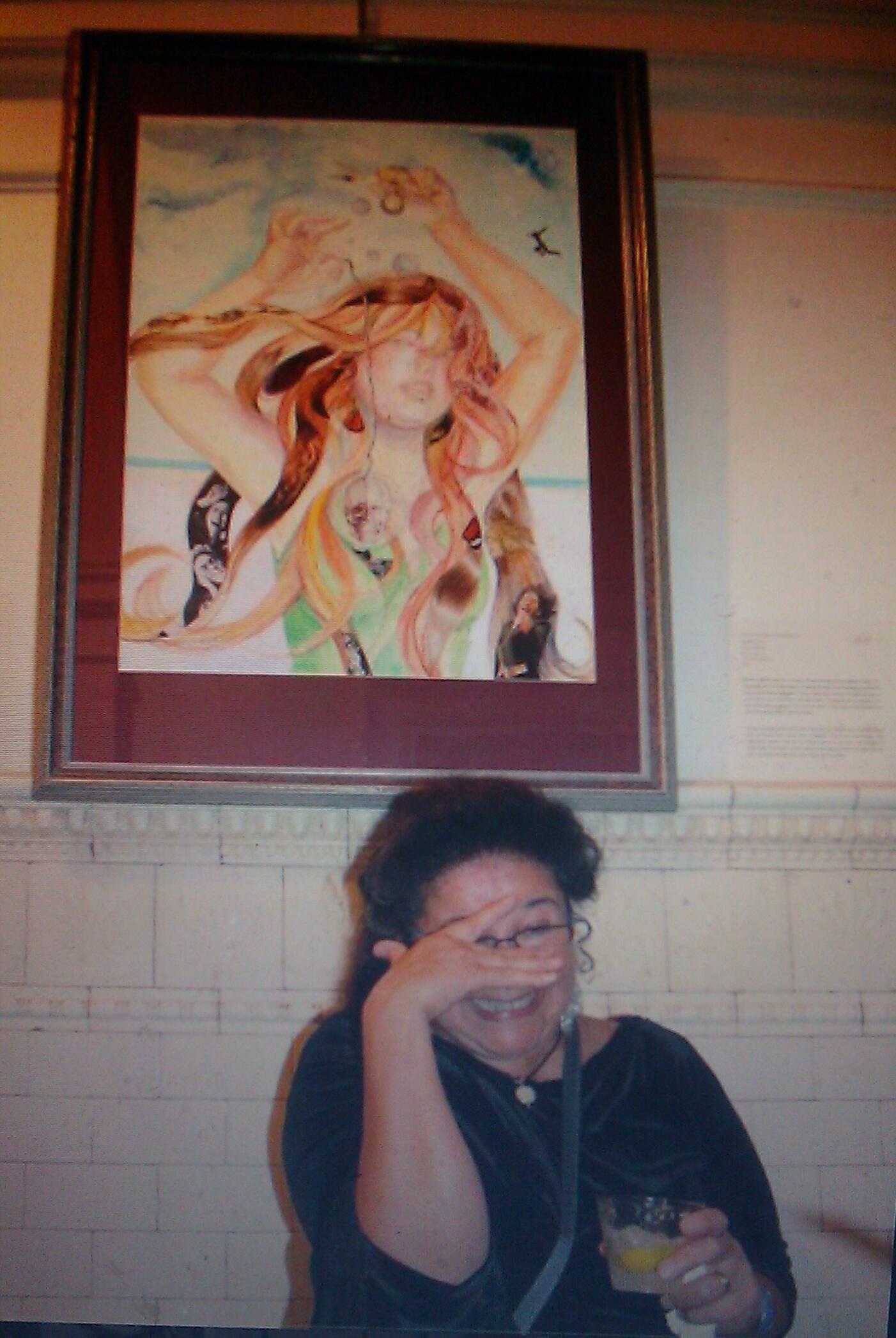
I have included one of my paintings called “Carpe Diem” because it expresses the idea that my parents, by the act of immigrating, taught me to seize every opportunity to explore.

Spanish translation by Amalfi Ramirez Finnerty


“Lloré todos los días durante todo un año después de llegar a los Estados Unidos. Sabía que nunca regresaríamos”.

Amalfi Ramirez Finnerty es un artista.

Mi madre me llamó Amalfi. El apellido de mi padre era Ramirez y la familia de mi marido, inmigrantes Irlandeses, es Finnerty.

El arte es mi vida. Yo pinto y enseño.

La aventura fue un gran motivador con la decisión de mis padres de abandonar Sudamérica.

Tenía nueve años cuando ellos y mis dos hermanos salimos de Caracas, Venezuela. Lloré todos los días durante todo un año después de llegar a los Estados Unidos. Sabía que nunca volveríamos.

El viaje fue natural para mi madre Andina y mi padre Caribeño. Cuando era adolescente, mi madre dejó los Andes y se mudó a la ciudad. Mi padre siempre había estado en movimiento. Se fue de la República Dominicana, viajó a Aruba y luego a Venezuela. En ese momento, también visitaba a su amigo de la infancia que vivía en “América”. Por lo tanto, parecía una progresión natural cuando regresó de uno de los viajes a los Estados Unidos. Y nos informó que todos nos hibamos a mudar a Filadelfia.

Caracas estaba fría y crujiente la mañana que nos fuimos. Mi abuela había viajado catorce horas desde los Andes a Caracas para despedirse el día antes de que nos fuéramos. Incluso después del largo viaje, ella se dispuso a hacernos una última cena. Ella había traído con ella en el autobús una olla de Pisca Andina, una sopa más parecida a un guiso hecho de pollo, papas, zanahorias y huevos. Comimos algo y la vimos preparar Pabellón criollo, el típico plato venezolano lleno de colores y sabores: carne de res desmenuzada, arroz blanco, frijoles negros acompañados de rodajas de plátano dulce. Mi abuela nos dejó saber que estaba preparando Pabellón Andino, la versión andina que sustituye los plátanos dulces por plátanos fritos crujientes llamados tostones. Y a la mañana siguiente se levantó antes que cualquiera de nosotros para preparar Arepas con Perico: panes planos de harina de maíz rellenos con huevos revueltos, cebollas, tomates y pimientos. Con nuestros estómagos llenos y sus regalos del rosario en la mano, fuimos al aeropuerto. Recuerdo tener el asiento junto a la ventana en el avión de Pan Am y ver a mi abuela parada en la pista de aterrizaje diciendo adiós con la mano.

Fue la última vez que la vi.

Llegamos a Nueva York. Era febrero. Los amigos de mi padre estaban esperando. Corrieron hacia nosotros con brazos llenos de telas de diversas texturas, lana, pelo, tweed. Dijeron que teníamos que poner esto porque hacía frío y nevaba. Todo parecía surrealista. Luego todos nos metimos en un automóvil y nos fuimos a Filadelfia.

Padres en movimiento crearon una persona amante al viaje. En mi vida adulta, he vivido en Italia durante tres años, cuatro años en Francia y un año Fulbright en Inglaterra. He viajado la mayor parte de Europa y de todos los Estados Unidos. También he pasado más tiempo en Egipto, Sudán, Kenia, Marruecos, México, Ecuador y Perú. . . y una vez quede atrapada en Moscú durante cuatro días. Amo viajar. Es mi cosa favorita, estar en movimiento me hace sentir en paz.

La mayoría de mis primeras obras de arte se realizaron durante mis viajes.

No siento conflicto con mis diferentes culturas. Creo que me ha ayudado que llegue a los Estados Unidos a la edad de nueve años. A veces le digo a la gente que soy la verdadera Americana. Soy de América del Sur, mi padre era caribeño y crecí en América del Norte.
También siento que he integrado todas mis culturas, la andina, la caribeña, la europea, la estadounidense, la viajera y la que se siente en casa adonde quiera que vaya.

He incluido una de mis pinturas llamada “Carpe Diem” porque expresa la idea de que mis padres, por el hecho de emigrar, me enseñaron a aprovechar todas las oportunidades y explorar.

Portraits of People on the Move tells the stories of Philadelphia-area immigrants through their own words on the Supperdance.com blog and was first shown as an exhibition June 25–28, 2015, at the Gray Area of Crane Arts in Philadelphia. The exhibition was created as a companion work to Supper, People on the Move by Cardell Dance Theater, a dance inspired by themes of migration.
Portrait of Pablo Meninato

“There is a permanent feeling of longing, of missing places, smells, food, family, and childhood friends.”

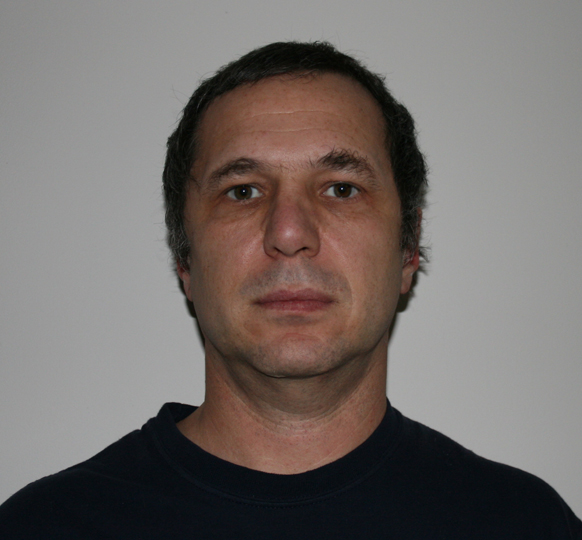
Pablo Meninato is an architect.

Pablo Meninato's passport photo.

Pablo Meninato’s passport photo.

I immigrated twice to the US: I first came as a student (after four years I went back to Argentina), and after ten years I returned with my family. In regards to our second departure, I remember we had a gathering with friends and family at our home. I don’t recall any particular food we had that night. We just wanted to spend time together with people we love, talk a little bit about the oncoming challenge of moving to a new country (an experience that could be particularly hard for the kids), though we also chatted casually about diverse and mundane topics.

We flew from Buenos Aires to JFK airport in New York, from where we rented a van to Philadelphia. We were not certain if the move was going to be permanent; though we thought that was a possibility. I definitively feel pulled between two cultures and two languages. Seems to me, once eradicated from your place, you never feel again completely “at home.” In my case, since I left the first time, I have never felt completely at home either in the US or in Argentina.

Sometimes I think I’ve become a sort of “amphibious,” since I can survive in different environments, though I never feel fully adjusted. Moving, like most experiences, has its positive and negative aspects, no doubt it is wonderful to get to know so well a different culture, make new friends and engage in a new language; though by the same token, there is a permanent feeling of longing, of missing places, smells, food, family, and childhood friends.

Spanish translation by Pablo Meninato


Pablo Meninato, Arquitecto

En dos ocasiones emigré a los Estados Unidos. La primera vez vine como estudiante, pero luego de cuatro años retorné a la Argentina. Luego de establecerme diez años en Buenos Aires, regresé a Filadelfia esta vez con mi recientemente creada familia: mi mujer Silvana, y mis pequeños hijos Paula y Lorenzo. En ocasión de la segunda despedida, tengo vivamente presente la reunión con nuestros familiares y amigos en nuestra casa en Buenos Aires. De esa noche no recuerdo alguna comida en particular, tan solo el querer disfrutar los últimos momentos con la gente que queremos, hablar del desafío de mudarse a otro país, y especular sobre cómo nuestros hijos confrontarían la inédita experiencia. También conversamos sobre cuestiones mundanas, como ser libros, películas o fútbol. Desde Buenos Aires volamos al aeropuerto JFK en NYC, donde alquilamos una camioneta para ir a Filadelfia. En ese momento, con Silvana no sabíamos si la movida era permanente, pero teníamos claro que era una posibilidad. Definitivamente me siento tironeado por dos culturas y dos idiomas. Me parece que, una vez erradicado de un lugar, uno no termina de sentirse completamente “en casa” en ningún otro sitio. En mi caso, desde que me fui de Argentina la primera vez, nunca me sentí completamente en mi lugar ni en los Estados Unidos, ni en la Argentina. A veces pienso que me he convertido en una suerte de ‘anfibio,’ ya que puedo sobrevivir en diversos ambientes, pero nunca me hallo totalmente adaptado a un sitio. Mudarse, como la mayoría de las experiencias, tiene su aspecto positivo y negativo, sin duda es magnífico poder conocer tan bien una cultura diferente, hacer nuevos amigos, y aprender un nuevo idioma. Pero al mismo tiempo, hay una persistente sensación de ‘falta,’ de extrañar ciertos lugares, aromas, comidas, familiares, y amigos de la infancia.

Portraits of People on the Move tells the stories of Philadelphia-area immigrants through their own words on the Supperdance.com blog and was first shown as an exhibition June 25–28, 2015, at the Gray Area of Crane Arts in Philadelphia. The exhibition was created as a companion work to Supper, People on the Move by Cardell Dance Theater, a dance inspired by themes of migration.
Portrait of Laura Marconi

“After living abroad it was hard to go back to the ‘old’ Italian ways.”

Laura Marconi is a painter.10. IMG_0163

I was born in Rome. I always loved art. Giovanni Casadei lived in the same building and we often drew and painted together. I wanted to go to art school, but my father had a stroke so my family decided that it was best for me to choose a different kind of high school. So instead of the five-year Liceo Artistico I had hoped for, I studied to be a travel agent. Then my brother suddenly passed away. Everyone was dying or getting sick, my father couldn’t speak anymore. It was not a good place for a teenager.

I always felt different. I didn’t want to follow the usual pattern, I believed that it was not my destiny. I left everything and came to the US, alone, in 1980. I wanted to test myself in a new country, new culture, new language. I arrived in New Haven in December, I had a friend of a friend there. I had studied English and French, but American English was so different. In New Haven, I went to an ESL school for several months, then I moved to New York City. After staying in the US for nine months I went back to Rome to work.

I came to the US to see if I could handle it; it was a right of passage for me. After living abroad it was hard to go back to the “old” Italian ways; I couldn’t stay there. So I left my apartment in Rome, my boyfriend, my cat, my family, my friends, and I went to San Francisco where I started taking classes at UC Berkley Extension and then at California College of Art and Craft.

Giovanni was in Philadelphia. He introduced me to his friend, a musician. We got married and had a son; we are divorced now. We lived in Wayne, and in Center City. When my son started school I applied to PAFA (Pennsylvania Academy of Fine Arts). Finally, after all those years, I was able to go to an art school! I graduated in 2001. The Academy traditional method of teaching reminded me of Italy: the building, the sculptures in the cast hall were familiar to me. It was a way to connect to my background. It took me almost 40 years to do what I really wanted to do. I’ve done things here that I would not have been able to do in Italy.

When I first moved to this country, I was looking in from outside. It took a long time for me to change that. Not being born in US, my roots were not here; I felt subtly uncomfortable, a little apart or different. At some point I realized that I was not missing anything but instead I was fortunate to have two different points of views. I’m both Italian and an American citizen. I know now that I could be anywhere in the world and be fine.

When I go back to Italy people relate to me in the same way they did before I left, as if I were still in my twenties. Especially the older generations relate to me this way. They are living their normal lives, nothing much has changed for them—Italians are into traditions. When they come here they don’t adapt. But when I go there, I have to adapt. It is a one-way street.

To go to a new place, there’s a thin line between fear and excitement. Everything is different from country to country. It was exciting when I left, but I cried every day at first. I was looking for adventures, but it was scary too.

I remember when I was little looking at atlases. My father had been in the navy and told me about all the different places he visited. I was always intrigued. My choice to emigrate gave me strength, courage, hope for a better future. Most important it has been a way to get to know myself, and my limitations. There is a high price to pay though. Missing every day events with my family and friends. Big and smaller events, going out for a pizza, looking at a sunset in Rome over the Tiber, the wonderful monuments and squares, the smells, the colors . . .

Portraits of People on the Move tells the stories of Philadelphia-area immigrants through their own words on the Supperdance.com blog and was first shown as an exhibition June 25–28, 2015, at the Gray Area of Crane Arts in Philadelphia. The exhibition was created as a companion work to Supper, People on the Move by Cardell Dance Theater, a dance inspired by themes of migration.
Portrait of David De La Mora

“When that place is missing, the heart and mind suffers a conflict.”

David De La Mora is an orchestra conductor, professional musician (viola), and professor.

La Mora 5

I left because in my country the “music and show world” is very controlled; a small group of people control orchestras, theaters, recordings, music contracts, concert halls, budgets, everything, and don’t allow anyone to take part if they feel that you could be a “threat.” It cost a lot of time, patience, and human health to find something, to create, to keep trying or change something, and if you do your first steps in some way not under their control, even like that you will have to avoid many difficulties from the Cuban cultural system. In other words, I left because I wanted to create a great career and they won’t ever let me do it or be able to fight for it.

I know that my move is not permanent: I’m looking to develop a professional career and I’m trying in this new place and with a new system—lets see how it goes. The world is always changing and we never know where is the “Triumph” that’s waiting for you. That is why we have to look everywhere, and surely never forget that Home is always Home.

For someone who indeed loved and very deeply his place, his world, family and friends—when all that is missing, the soul, heart, and mind suffers a conflict. Many emotions come to you and surely in the most intimate times of your life, which in my case are the moments when I play my instrument or conduct an orchestra. A musician feels so much underneath the skin when they play music, and all those feelings turn more dramatic with his performance. Being a musician is all I am, and in order to be my greatest I had to look outside of my country—where I cannot find the way to work and develop my self as I would like to

David de la Mora
Maestro Orchestra Conductor
Viola Master Performance, 
Violin and Viola Major Professor, 
Piano Professor
National Symphony Orchestra of Cuba
 Guest Conductor
National Ballet of Cuba,
Guest Conductor
Georgian Court University, NJ
, Music Adjunct Professor

Portraits of People on the Move tells the stories of Philadelphia-area immigrants through their own words on the Supperdance.com blog and was first shown as an exhibition June 25–28, 2015, at the Gray Area of Crane Arts in Philadelphia. The exhibition was created as a companion work to Supper, People on the Move by Cardell Dance Theater, a dance inspired by themes of migration.

Portrait of Patrick Crofton

Patrick Crofton is a semi-retired make-up artist, and a painter of portraits and cityscapes.

Patrick hanging some of his paintings in an exhibition at the Pennsylvania Academy of Fine Arts.

Patrick hanging some of his paintings in an exhibition at the Pennsylvania Academy of the Fine Arts.

In 1981 I was living in Cape Town, South Africa, where I had grown up. A friend invited me to visit him in New York, and while there I met and fell in love with a man who turned out to be my life partner—we were recently married after spending more than thirty-three years together. I had to return to Cape Town after a couple of months of our being together to begin the immigration process, and also to see whether the new relationship would survive being separated. After about nine months I was able to return, and we’ve been together ever since. Leaving there was a bit of a wrench, as I was very close to my mother who was my only living parent at that point. I have a sister as well, and at least she and her own growing family were able to provide some distraction for our mother.

Professionally it was a bit of a gamble as I was fairly successful in South Africa in my career, admittedly though a big fish in a small pond! Fortunately things turned out fine and I’ve done very well.

Initially adjustments had to be made by both of us, but I’m very glad I stuck it out. I do miss some friends I had in South Africa very much, and am still in touch with a few . . . the new technology has made it very easy.

I was given a number of send-off parties by friends, who possibly thought that I’d be back soon. At that point though, many people were exploring their options for leaving South Africa, as the future there seemed (and indeed still does seem) uncertain. I don’t really remember a sense of finality on the day I left, just mostly being excited at reconnecting with my lover and being quite optimistic about the future. I flew into JFK, returning about nine months after we had met. I had already made some professional connections, which gave me a reason to hope for a bright future in the States. I think I expected it to work out from day one. Obviously there were times I was homesick but periodic visits from my mother and friends, and trips back to South Africa, did much to help, as well as the fact that every time I went back I realized how increasingly insecure and precarious life had become there.

I assimilated fairly quickly into the rhythms of life in New York, which seems to be largely made up of immigrants anyway! I have always tried to remain myself though, and am very conscious of my heritage of Anglo-Irish/Dutch ancestors. I would never go back to live in South Africa now, though, as I couldn’t live with that kind of uncertainty. I’m very happy here, and we’ve made a good life for ourselves in Philadelphia, where we both moved in order to study painting. For a while I missed New York far more than I ever missed Cape Town, but we simply can’t afford to live there any more and my partner/husband has developed such an aversion to New York City crowds that we seldom venture there for longer than it takes to see a show!

I can’t really say that emigrating to this country has affected my work, as I only really developed my painting after I came to Philadelphia, years after my move.

There I was a graphic designer who switched to being a make-up artist, which I continued until we decided to move to Philly to study at the Pennsylvania Academy of the Fine Arts. My painting is principally portraits and cityscapes. I recently made some woodcut prints, though, for my grand-niece in Cape Town for her wildlife conservation cause.

My work in general was one of the main reasons I came to this country (apart from falling in love); although successful there, I was part of an industry with limited opportunities and a growing number of competitors fighting over a small amount of jobs.

Portraits of People on the Move tells the stories of Philadelphia-area immigrants through their own words on the Supperdance.com blog and was first shown as an exhibition June 25–28, 2015, at the Gray Area of Crane Arts in Philadelphia. The exhibition was created as a companion work to Supper, People on the Move by Cardell Dance Theater, a dance inspired by themes of migration.
Portrait of Isora Bosch

“I understood early in my exile that I only had two choices: feeling like a victim or adapting to new cultures and playing the lead role in my story as a Cuban refugee.”

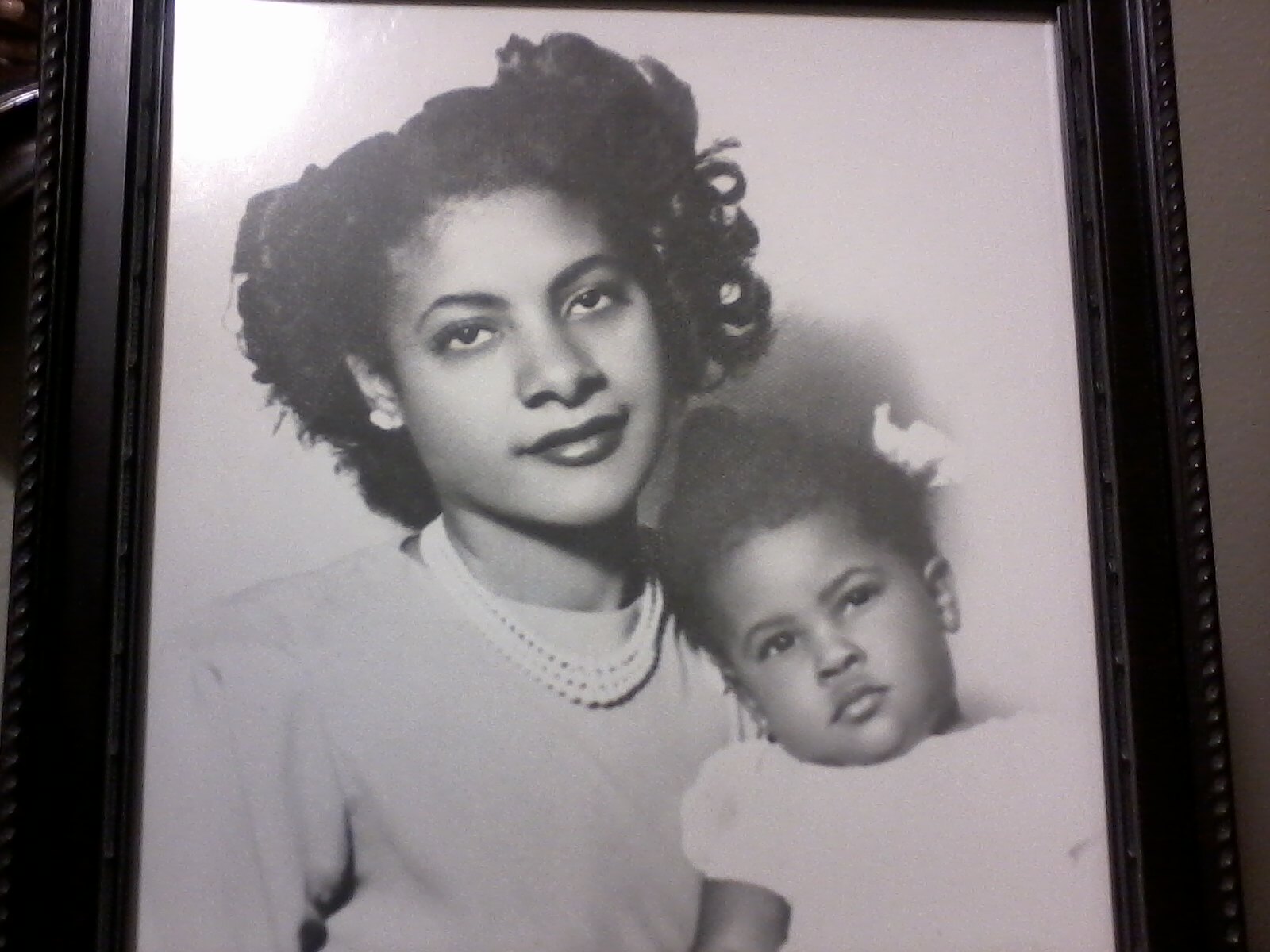
Dr. Isora Bosch is an organizational and clinical consultant, life coach, and therapist.

IsoraMy journey started at age fourteen when my parents and I left Cuba after the revolution in 1962. We arrived in Miami as refugees. Although my father had been a banker and my mother an educator, we arrived with nothing and had to start from scratch.

I will never forget the Pan Am flight that took us from Havana to Miami. The first time we tried to board the airplane, government officials told us that we could not fly on that day; no reasons were given for this decision. The day after, we returned to the airport; I was anxious thinking that it could happen again. When we landed in Miami I was in a state of psychological disorganization, feeling uncertain about my new surroundings and about the future. One thing I will always remember is that, even during the most difficult times, my parents always stressed the importance of education.

After leaving Miami I lived in Puerto Rico, Spain, and New York. Later on I moved to New Jersey where I have resided for many years. I understood early in my exile that I only had two choices: feeling like a victim or adapting to new cultures and playing the lead role in my story as a Cuban refugee.

I cannot remember any farewell supper. What I remember is that in 1962 food was already rationed in Cuba. I do not remember a family gathering; it was very painful for us and for the relatives who stayed in Cuba.

I currently consider myself a citizen of the world and try to adapt to any culture or any person I interact with. Living in this country has enriched my life and has offered me the opportunity to meet wonderful people from all walks of life. I have embraced a new country while maintaining the connection with my own ethnic heritage; today my exile is one of the things I am grateful for in life.

Portraits of People on the Move tells the stories of Philadelphia-area immigrants through their own words on the Supperdance.com blog and was first shown as an exhibition June 25–28, 2015, at the Gray Area of Crane Arts in Philadelphia. The exhibition was created as a companion work to Supper, People on the Move by Cardell Dance Theater, a dance inspired by themes of migration.
Portrait of Kostas Makrakis

“I do not feel pulled by two different cultures, my Greek cultures prevails the most by far!”

Kostas Makrakis is a certified public accountant.

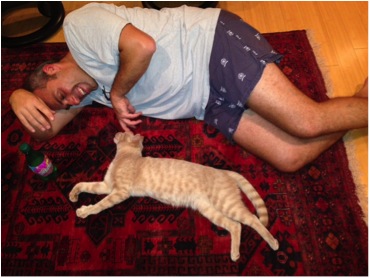
KostosMy experience as an immigrant is not painful as that of many. I came under an intra-company transfer for a two-year period. I did not want to do that. I had a wonderful life and an excellent career in Greece. However, I had to immigrate to keep my relationship alive: to continue my four years relationship with the woman I love, motivated me to leave my birth country.

I remember the last night before leaving Greece. The flat was empty, I used a mattress on the floor for my last sleep in the flat, and for first time I allowed my cat to sleep with me, at the corner of the mattress. Putting my cat in the travel cage, trying to fool him, without knowing that we are flying to another continent, made me feel very cheap and fake.

I traveled by plane. At my arrival I remember my trolley with two bags and the cat cage and my woman waiting for me. I was not sure that I will live permanently in USA, actually, I thought I would return back home after one to two years.

I had my last supper back home with the people I miss the most besides my family—my running friends, with whom I trained to run the Athens classic marathon!!!

I do not feel pulled by two different cultures, my Greek cultures prevails the most by far!!! However, I feel the need to adjust to local culture and align with local customs.

Overall, so far, well YES, for sure it was worth it!!!

My immigrant experience affected my work, it made me more hard working and more responsible, overall a better professional.

Portraits of People on the Move tells the stories of Philadelphia-area immigrants through their own words on the Supperdance.com blog and was first shown as an exhibition June 25–28, 2015, at the Gray Area of Crane Arts in Philadelphia. The exhibition was created as a companion work to Supper, People on the Move by Cardell Dance Theater, a dance inspired by themes of migration.
Portrait of Sachiko Komagata

“When my nine-year-old daughter asked me who she was, American or Japanese? I told her that you can decide who you are.”

Sachiko Komagata is a college professor and physical therapist.

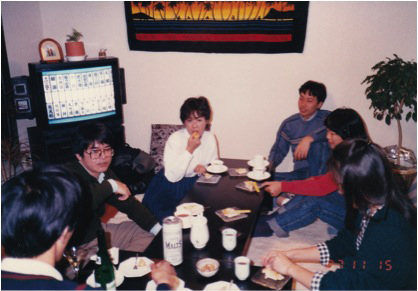
The last supper that Sachiko shared with her husband’s best friends from junior high school.

The last supper that Sachiko shared with her husband’s best friends from junior high school.

My husband got a job in New York City and we decided to come to the US for the very first time in our life with one-way airplane ticket. We cleared our apartment in Tokyo and took upon this adventure. People in Tokyo asked us why we were moving to the US when the Japanese economy was excellent, its cities are safe, clean. We had no fear but with the excitement of starting something from a scratch (no friends, no family, no acquaintances in the US). My brother-in-law reassured us that he would take good care of my father. It was reassuring and we felt gratitude towards all family members who were open-minded as we were.

We had a total of six cardboard boxes of our belongings to start our lives in the US. Jersey City, New Jersey, was our first residence. Beautiful brownstone apartments and houses were filled with diverse artists, professionals, and families of diverse origins, which felt like our new home. The apartment owner who lived upstairs was kind and supportive suggesting us to get an air conditioner while I was totally okay with 100-degree room temperature from the humid hot summers in Tokyo. There was a couple who lived above our apartment who fought each other many nights with violent sounds. I wondered if I should call the police many times but assumed that this may be the reality of some of the US household and did not intervene.

It is funny to think about, but I have now lived in the US longer than the time I lived in Tokyo. When I first arrived, I noticed so many differences between the two cultures. Even how heavy the doors are compared to the ones in Tokyo. Then I started to notice more similarities than differences in human experiences, sickness, death, poverty. Now switching back and forth between two cultures feels so effortless. Bilingualism goes beyond the language and extends into cultural appreciation, immersion, and interpretation. When my nine-year-old daughter asked me who she was, American or Japanese? I told her that you can decide who you are.

I am an amateur Japanese calligrapher. If I had stayed in Japan, I would not have picked up my brush. I think moving to the US, and thinking of my mother who was a calligraphy master, brought me back to pick up the brush. Japanese calligraphy for me is the connection to my mother who is not on this earth any longer. It is an art as well as a spiritual experience to sit down, pick up a brush, put it into black sumi ink and gaze at a blank sheet of paper and then through movement of the brush, something that was not there is forming . . . no regret, no bringing the time back to the past, just be where I am.

There at least three dinners that I recall now just before leaving Tokyo. One was at my husband’s close friend’s home from his junior high school. There were about ten friends gathered and we ate a simple pot-luck format dinner—all homemade. I personally do not recall but my husband tells me that we received money as a gift. We shared hearty laughter.

Another one was with my close friends from my junior high school at an Italian restaurant in Tokyo. I do not recall exactly what I ate, but I recall exactly where I sat in relationship to my friends. Our conversations were focused on reminiscing about our days as young adolescent girls and I recall that one of my friends shared her stereotype about the US (high crime rate and people have guns) and she was very concerned that I was moving to such a dangerous society. Another friend told me that the healthcare cost in the US is so expensive so she wished me well. I recall my attitude being “this is another trip so I would enjoy observing and learning from it.”

The true last supper before leaving Tokyo was at a Japanese restaurant at Narita Airport with my family. I recall that there were my widowed father, my older brother (now deceased), my older sister and her husband (now deceased). Since my husband left for New York six weeks prior to find an apartment, it actually was my very first trip alone anywhere. My father was always open-minded, supportive of my decisions—including my trip to Western Europe, when I got married at the age of nineteen, for my honeymoon. For that one-month trip, he gave me a dozen of photo film rolls and asked me to just take some pictures of Europe so we can enjoy seeing them after returning. He himself wanted to visit the US when he was younger as I heard directly from him when I was younger. His own father, my grandfather, tried to immigrate into Indonesia and operate a coffee plantation but the business failed and he came back. Although we did not travel much when I was growing up, he encouraged us, his children, to travel far when we are still young adults and our sensibility robust. Another older sister of mine immigrated to Australia just before our move to the US. Something in my blood made me move like salmons and go up the stream. When my mother passed away, she asked me to be gentle and kind to my father. My brother-in-law’s kind reassuring words “we will take good care of your father” put me at ease as I departed Tokyo leaving my family not knowing how ever long this trip may become.

The last supper with Sachiko shared with close friends before departing for the US.

The last supper with Sachiko shared with close friends before departing for the US.

Portraits of People on the Move tells the stories of Philadelphia-area immigrants through their own words on the Supperdance.com blog and was first shown as an exhibition June 25–28, 2015, at the Gray Area of Crane Arts in Philadelphia. The exhibition was created as a companion work to Supper, People on the Move by Cardell Dance Theater, a dance inspired by themes of migration.